What Is a Food Production Department? The Complete 2026 Strategic Guide
Discover the engine room of the hospitality and catering industry. This definitive guide explores the structure, key roles, operational processes, and strategic hiring insights for building a world-class food production team in the UK.
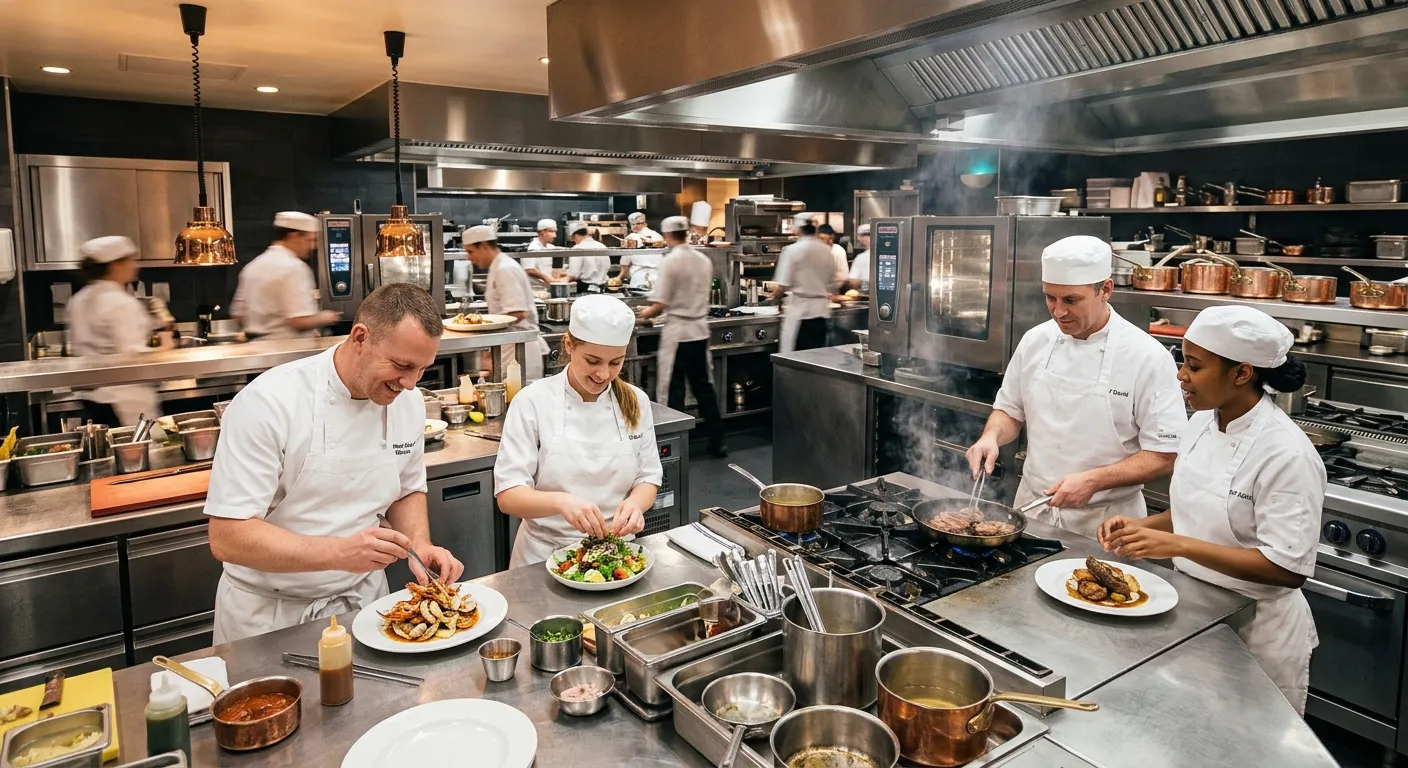
In the dynamic world of catering and hospitality, the Food Production Department is the absolute cornerstone of success. It's far more than just a kitchen; it's a complex, meticulously organised operational hub where raw ingredients are transformed into the experiences that define your brand. For business owners, managers, and HR professionals, understanding this department's intricacies is the first critical step towards achieving operational excellence, maintaining consistent quality, and scaling your business effectively.
This comprehensive guide will deconstruct the food production department, examining its core functions, essential personnel hierarchy, daily workflows, and the significant challenges it faces. Most importantly, we will provide actionable strategies for staffing this vital department, from securing top-tier executive chefs to reliable warehouse jobs support and specialised Grain Production Staff Adalah professionals. Whether you're running a boutique hotel, a large-scale event catering company, or a restaurant chain, mastering your production department is non-negotiable for profitability and reputation.
Core Pillars of a Modern Food Production Department
Click through the tabs below to explore the fundamental categories that define this critical business unit.
Primary Operational Functions
The department's mission is executed through several interconnected functions:
- Menu Planning & Costing: Collaborating with management and sales to design profitable, executable menus that align with brand identity, seasonal availability, and budget constraints. This involves detailed recipe costing and yield management.
- Procurement & Inventory Management: Sourcing quality ingredients, managing supplier relationships, and maintaining optimal stock levels to prevent waste and shortage. This is closely tied to specialised grain and bulk commodity handling.
- Production Execution: The core activity of preparing, cooking, and assembling food items according to strict standardised recipes (SOPs), ensuring consistency across all service periods.
- Quality Assurance & Safety: Enforcing rigorous HACCP (Hazard Analysis Critical Control Point) protocols, maintaining impeccable hygiene standards, and conducting regular quality checks on all output.
- Waste Management & Sustainability: Implementing systems to track, reduce, and responsibly dispose of food waste, aligning with modern environmental and cost-saving goals.
Hierarchical Team Structure
A well-defined hierarchy is crucial for clear communication and accountability. The structure typically flows from strategic leadership to operational execution.
Leadership & Management
This tier sets the vision and manages resources. Key roles include the Executive Chef or Head of Production, who oversees all culinary operations, and the Kitchen Manager, who handles daily scheduling, inventory, and admin. For senior recruitment needs, our guide on how to hire a Head Chef offers invaluable strategic insights.
Skilled Production Chefs
The department's backbone. Includes Sous Chefs (second-in-command), Station Chefs (saucier, grillardin, patissier), and Specialist Chefs. Sourcing this talent often requires targeted approaches, such as partnering with a dedicated Chef Recruitment Agency in Kerala or other specialist regions to tap into specific culinary traditions and skillsets.
Prevailing Operational Challenges
Modern food production faces intense pressure from multiple angles. Proactive management is essential to navigate these issues.
Staffing Volatility & Skill Shortages
High turnover, last-minute absences, and a shrinking pool of skilled labour are perhaps the most critical challenges. This makes flexible staffing solutions, like those offered by a reliable temporary catering staff agency, not just convenient but essential for business continuity.
Other significant hurdles include supply chain instability affecting ingredient cost and availability, the constant battle to maintain profit margins amidst rising costs, adhering to ever-evolving food safety regulations, and managing the logistical complexity of high-volume output for events or multiple outlets.
The Future: Technology & Adaptation
The department of tomorrow is data-driven and agile. Key trends include:
- →Integration of AI and IoT for predictive inventory, equipment monitoring, and waste tracking.
- →Increased demand for plant-based and allergen-safe production lines.
- →A hybrid workforce model blending core permanent staff with a flexible pool of vetted temporary specialists, a concept explored in our guide to temporary agency work.
- →Hyper-local sourcing and a stronger emphasis on full-circle sustainability practices.
Why a Well-Optimised Food Production Department is Your Greatest Asset
Brand Consistency & Reputation Management
A tightly controlled production environment guarantees that every dish served, whether in your flagship restaurant or at a remote event catering gig, meets the same high standard. This builds customer trust and turns diners into loyal advocates, directly impacting your bottom line and online reviews.
Cost Control & Profit Maximisation
From precise portion control and yield management to efficient energy use and waste reduction, an optimised department is a profit centre. Effective procurement, including managing specialists like Grain Production Staff Adalah for bulk items, locks in margins. Strategic hiring, using services like recruitment outsourcing, reduces costly hiring mistakes.
Operational Scalability & Flexibility
A department built on clear systems and a mix of permanent and flexible staff can scale up or down seamlessly. This agility allows you to confidently accept large contracts, manage seasonal peaks, or cover unexpected staff shortages without compromising quality. Platforms dedicated to food production employment are key to accessing this flexible talent pool.
Strategic Staffing: Building Your Production Dream Team
Understanding What Is Food Production Department theory is one thing; staffing it effectively is another. The right team blend is strategic. You need visionary leaders, skilled executors, and reliable support staff.
1. Leadership Recruitment: The Head Chef & Kitchen Manager
These roles require a blend of culinary artistry, financial acumen, and people leadership. Look beyond a great CV for proven experience in menu engineering, cost control, and team development. For a deep dive into this critical hire, our resource on Hire A Head Chef In 2026 is essential reading. Consider also the value of a Chef Recruitment Agency in Kerala or similar specialised agencies to access global talent pools with specific, sought-after expertise.
2. Securing Core Skilled Staff: Sous Chefs & Station Chefs
These are your department's engine. Recruitment should focus on technical skill verification, adaptability, and cultural fit. Practical staged trials are invaluable. For consistent access to pre-vetted talent, establishing a relationship with a specialist kitchen staff recruitment agency in London or other major hubs can dramatically reduce your time-to-hire and ensure quality.
3. The Critical Support Network: Porters, Commis & Warehouse
A high-performing kitchen cannot function without an efficient support system. Relief cooks, kitchen porters, and warehouse staff are the unsung heroes. They ensure clean workspaces, timely mise-en-place, and proper stock rotation. For bulk ingredient handling, understanding the role of Grain Production Staff Adalah (which refers to the function and importance of grain production personnel) is crucial for operations dealing with flour, rice, or other grains at scale. Efficiently filling these roles is often best handled through dedicated job boards for warehouse jobs and catering support.
See how quickly vital support staff like kitchen porters can be sourced to keep your production line moving.
Expert Staffing Insight
In today's market, a hybrid staffing model is no longer a luxury—it's a necessity for resilience. Build a core of permanent, culturally-aligned leaders and senior chefs. Then, partner with a premium catering staff agency to create a flexible, on-demand talent pool for peak periods, special events, and unexpected cover.
This approach mitigates risk, controls fixed labour costs, and gives you access to a wider range of skills. For instance, you might use your permanent team for daily à la carte service but bring in specialised event catering staff for a large wedding. This strategic flexibility is a key competitive advantage discussed in our hotel staffing solutions guide.
Frequently Asked Questions on Food Production Departments
What's the difference between a Food Production Department and a standard kitchen?
While all kitchens produce food, a Food Production Department implies a larger scale, formalised structure, and a focus on systematic, repeatable processes for volume output. It's commonly found in central production units (CPUs) for multi-site restaurants, large-scale catering companies, hotel groups, and manufacturing facilities. It incorporates dedicated roles for planning, procurement, and quality control that go beyond the scope of a single restaurant's kitchen brigade.
How can I find specialised staff like 'Grain Production Staff' or a Chef from a specific region?
Specialised roles require targeted recruitment strategies. For technical bulk-handling roles (Grain Production Staff Adalah a key concept here), industry-specific job boards and agencies familiar with food manufacturing are ideal. For regional culinary expertise, such as hiring through a Chef Recruitment Agency in Kerala, partnering with a niche agency that has deep networks and cultural understanding is highly effective. They can pre-vet candidates for both skill and their ability to adapt to your operational environment. For broader needs, our catering recruitment hub is a great starting point.
What is the single biggest cost-saving opportunity in a food production department?
Reducing food waste through meticulous tracking and process improvement often presents the largest direct saving. However, the most significant strategic cost control is optimising your labour model. Overstaffing drains profit; understaffing damages quality and morale. Implementing a smart mix of permanent and flexible temporary staff, sourced through efficient channels like a temporary catering staff agency, allows you to align labour costs precisely with demand, turning a major expense into a manageable, variable cost.
How do I start building or restructuring my food production team?
Begin with a clear operational plan: forecast your volume, define your menu complexity, and map the required processes. Then, reverse-engineer your staffing needs from there. 1) Secure leadership first (Head Chef/Manager). 2) Hire or identify your core skilled permanent team. 3) Establish partnerships for flexible staffing to cover gaps, peaks, and specialisms. For comprehensive support, consider professional recruitment solutions that can manage part or all of this process, from sourcing a chef to filling general jobs.
Build Your World-Class Food Production Team Today
Understanding What Is Food Production Department is the first step. Taking action to staff it with precision is what separates market leaders from the rest. Whether you need a visionary head chef, skilled station cooks, reliable porters, or specialised Grain Production Staff Adalah experts, the right talent is the final, critical ingredient.
Access a dedicated network of professionals across the UK, from London to Nottingham, and all specialties within the hospitality sector.