
Grain Production Staff Adalah: The Strategic Guide to Hiring Your Food & Beverage Backbone
Your definitive resource for understanding, recruiting, and managing the essential workforce powering the global food supply chain.
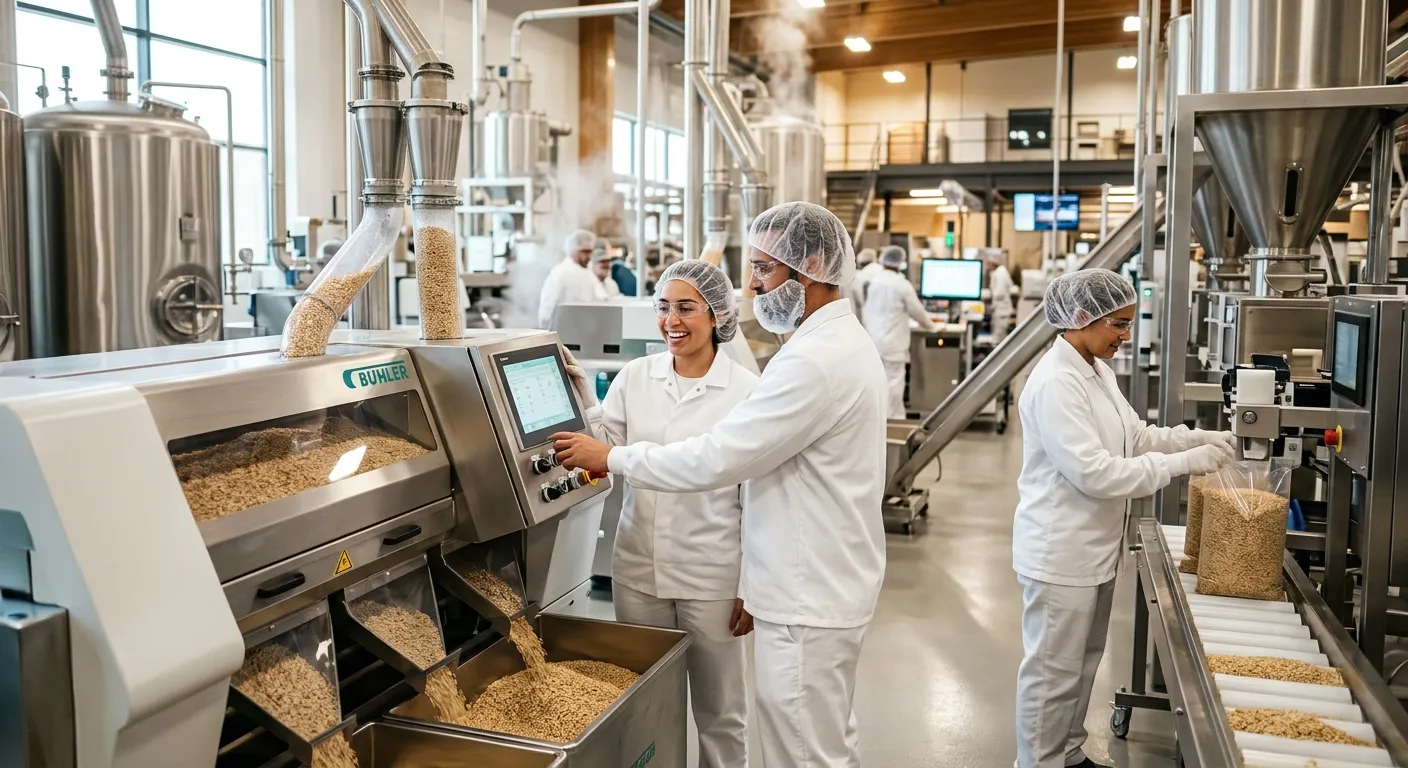
Building a reliable team starts with the right knowledge.
Understanding the Core of Food Manufacturing
The term Grain Production Staff Adalah refers to the specialized personnel responsible for the entire lifecycle of grain-based food products, from raw material handling to final packaging. This is the critical engine room of the Food Production Employment sector.
The Strategic Importance of Grain Production Staff
In essence, Grain Production Staff Adalah the operational foundation. They ensure the efficiency, safety, and quality of producing everything from flour and pasta to breakfast cereals and animal feed. Their work directly impacts supply chain resilience, cost control, and brand reputation. Understanding What Is Food Production Department begins with recognizing these roles as distinct from front-of-house or à la carte kitchen work; it's large-scale, systematic, and governed by stringent health and safety protocols (HACCP, BRC).
Whether you're managing a dedicated plant or a large-scale hotel bakery, the principles of hiring this staff share similarities with securing other critical operational roles, such as those found in our listings for Warehouse Jobs, where logistics and material handling are paramount.
Key Benefits of Optimizing Your Grain Production Workforce
Enhanced Food Safety & Compliance
A well-trained team is your first line of defense against contamination and compliance breaches. Properly skilled Grain Production Staff Adalah crucial for maintaining HACCP plans and passing audits, protecting your brand from costly recalls and legal issues.
Maximized Operational Efficiency
Expert staff minimize waste, optimize machine throughput, and reduce downtime. This direct impact on your bottom line is similar to the efficiency gains found by hiring through specialized Recruitment Solutions for other sectors, ensuring you get productive talent from day one.
Scalability & Workforce Flexibility
Understanding your core staffing needs allows you to build a scalable model. Partner with agencies to secure temporary staff for seasonal spikes or large orders, ensuring you never turn down business due to lack of personnel—a strategy just as effective as using an Event Catering Staff provider for unpredictable event schedules.
Connecting Global Talent with Local Needs
The search for Grain Production Staff Adalah often transcends borders. While a business in the UK might need local talent, understanding global recruitment practices is key. For instance, a Chef Recruitment Agency In Kerala specializes in sourcing culinary professionals from a region renowned for its expertise, highlighting how niche recruitment operates worldwide.
Similarly, your quest to understand What Is Food Production Department should include how these departments integrate diverse talent streams, from local hires to internationally sourced specialists for technical roles, all managed under unified quality standards.
Pro Tip: The Hybrid Hiring Model
For optimal resilience, combine a core of permanent, highly-skilled Grain Production Staff with a flexible pool of vetted temporary workers. This model mitigates risk from absenteeism and demand surges. Learn more about managing these dynamics in our video resource:
Strategic Hiring Pathways Compared
Direct Hiring
You manage the entire recruitment process internally.
- + Full control over candidate selection.
- – High time and resource cost.
- – Limited access to passive talent pools.
Specialized Agency Partnership
Leverage experts who understand Grain Production Staff Adalah roles.
- + Faster time-to-hire with pre-screened candidates.
- + Industry-specific expertise and compliance handling.
- + Flexibility to scale up or down quickly.
This decision mirrors choices in other fields, such as opting for Recruitment Outsourcing in Leeds for expert talent acquisition in competitive markets.
Integrating Production Staff into Broader Operations
The Food Production Department does not operate in a vacuum. Its efficiency directly affects downstream operations. Seamless coordination with warehouse logistics is critical; delays in packaging stall shipments, impacting customer satisfaction. This interdependence is why many successful businesses manage their warehouse and production staffing under integrated operational strategies.
Furthermore, the leadership overseeing these teams requires a unique blend of skills. Just as you would strategically plan to Hire A Head Chef to lead a culinary brigade, appointing a competent Production Supervisor or Manager for your grain operations is vital. They bridge the gap between floor-level execution (Grain Production Staff Adalah) and upper management's strategic goals.
Actionable Steps for 2026
- Conduct a Skills Audit: Map your current team's capabilities against future production technology (e.g., AI-driven quality control).
- Develop Clear Career Pathways: Show your Grain Production Staff a future within the company to boost retention, from operator to technician to supervisor.
- Forge Strategic Agency Relationships: Don't wait for a crisis. Establish partnerships with specialized agencies now for reliable temporary staffing support when you need it.
- Invest in Continuous Training: Regular upskilling on safety, new equipment, and efficiency protocols is non-negotiable for quality and morale.
Understanding how agencies vet candidates can streamline your own hiring process for Grain Production Staff.
Frequently Asked Questions (FAQ)
What exactly is meant by"Grain Production Staff Adalah"?
The phrase, translating to"Grain Production Staff Is," is used to define and describe the collective roles within the grain processing and manufacturing sector. It encompasses all personnel involved in operations, quality control, maintenance, and sanitation within facilities that turn raw grains into finished food products. It's the core workforce of the Food Production Department in this specific industry.
How does hiring for grain production differ from hiring a chef or catering staff?
While both require attention to hygiene and process, the scale and skills differ significantly. Hiring a chef, perhaps through a specialized Chef Recruitment Agency In Kerala or locally, focuses on creativity, menu planning, and small-batch cooking. Hiring Grain Production Staff prioritizes technical machine operation, adherence to industrial-scale standardized recipes, safety protocols for heavy machinery, and shift work within a factory environment. The recruitment channels are therefore more aligned with industrial and manufacturing job boards and agencies.
What are the biggest challenges in managing a grain production team?
Key challenges include maintaining consistent quality under high-volume pressure, ensuring strict compliance with ever-evolving food safety regulations, managing shift patterns to cover 24/7 operations, and reducing employee turnover in a physically demanding role. Proactively addressing these often requires the flexible support mechanisms that a staffing partner provides, much like how an hotel staffing solutions provider manages variable demand in hospitality.
Can I use a general catering agency to hire grain production staff?
It's not recommended. While a Catering Recruitment agency excels at finding chefs, waiters, and event staff, grain production requires a different talent pool with specific industrial experience, safety certifications, and technical aptitudes. You need a partner whose vetting process and candidate network are aligned with manufacturing and production environments. For the best results, seek agencies that specialize in food manufacturing, processing, or industrial temporary staffing.
Ready to Build Your Premier Production Team?
Understanding that Grain Production Staff Adalah the foundation of your output is the first step. Taking action to secure that foundation is what separates market leaders from the rest.
Whether you need permanent specialists to lead your quality control or a flexible, on-demand workforce to manage seasonal peaks, having the right hiring strategy is crucial. Don't let staffing shortages disrupt your supply chain or compromise your quality standards.
Streamline your recruitment for the Food Production Department and all other roles with our dedicated platform. From sourcing a Chef Recruitment Agency In Kerala to filling urgent operational vacancies, we connect you with the talent you need.
Case Study: How a Grain Mill Cut Staff Shortages by 38% in One Quarter
A mid-sized UK flour and semolina processor was struggling with unplanned downtime caused by inconsistent staffing across its milling, blending, and packaging lines. The company relied heavily on overtime to cover night shifts, but fatigue led to slower line changeovers, increased waste, and more frequent quality holds. After reviewing its workforce model, leadership identified a clear pattern: permanent staff were strong on core process knowledge, but the operation lacked flexible capacity during peak harvest periods and seasonal demand spikes.
The company partnered with a manufacturing-focused staffing provider to create a hybrid workforce. Permanent operators remained responsible for critical process control, machine setup, and HACCP documentation, while vetted temporary staff were onboarded for packaging support, material handling, sanitation, and overflow production. Each temporary worker completed a two-day induction covering allergen zones, PPE compliance, machine lockout basics, and reporting protocols. The staffing partner also provided a named account manager who reviewed shift performance weekly and replaced unsuitable candidates within 24 hours.
The Challenge
High overtime dependency, uneven shift quality, and recurring line stoppages during seasonal grain intake periods.
The Intervention
A blended staffing model combining permanent specialists with pre-screened temporary workers trained in food safety and machine support.
The Outcome
Staffing-related downtime fell by 38% in one quarter, overtime costs reduced, and audit readiness improved across three production shifts.
This example shows that workforce flexibility is not simply about filling gaps. It is about designing a production team that can absorb volatility without compromising safety, quality, or delivery performance. When temporary staff are properly trained and integrated, they can support core operations while permanent employees maintain continuity and institutional knowledge.
Mapping the Grain Production Workforce: Roles, Risks, and Recruitment Priorities
A successful production department is not a single job title; it is a connected system of roles that must operate in sequence. If one area is under-staffed or under-skilled, the entire line can slow down. Below is a practical breakdown of common roles within grain processing facilities, the risks associated with hiring for each, and the most effective recruitment approach.
| Role | Core Responsibilities | Hiring Risk | Best Recruitment Source |
|---|---|---|---|
| Grain Handling Operator | Receiving raw grain, moving material to silos, monitoring intake conditions, and supporting segregation for different grain types. | Under-skilled hires may cause cross-contamination, incorrect stock movement, or unsafe handling of bulk materials. | Industrial staffing partners with warehouse and production experience. |
| Milling Technician | Operating roller mills, sifters, and blending systems while adjusting settings to maintain particle size and flow consistency. | Poor technical judgment can reduce yield, increase waste, and create costly unplanned stoppages. | Permanent recruitment plus niche manufacturing agencies. |
| Quality Assurance Inspector | Testing moisture, texture, colour, foreign material, and packaging integrity while maintaining traceability records. | Inconsistent inspection can lead to failed audits, product recalls, or customer complaints. | Direct hiring for senior roles; agency support for junior inspectors. |
| Packaging Line Operator | Running bagging, boxing, sealing, labelling, and palletizing equipment at high speed. | Low attention to detail may cause mislabelling, allergen errors, or damaged packaging. | Temporary staffing for peaks and permanent staff for line leadership. |
| Sanitation and Allergen Specialist | Cleaning equipment, validating hygiene zones, supporting swabbing routines, and preventing cross-contamination. | Inadequate sanitation can trigger serious food safety incidents and regulatory penalties. | Specialized hygiene contractors and vetted production staffing agencies. |
| Production Shift Supervisor | Coordinating teams, enforcing SOPs, managing downtime, and reporting performance to operations managers. | Weak supervision creates confusion, lower morale, and inconsistent output quality. | Permanent recruitment with strong leadership assessment. |
The most effective hiring plans treat these roles as a connected chain rather than isolated vacancies. A strong packaging operator can lose value if the quality inspector is absent; a skilled milling technician can be slowed by inconsistent grain handling. Therefore, workforce planning should identify which roles require permanent depth, which roles benefit from flexible capacity, and which roles need agency partners with proven compliance experience.
The Future of Production Staffing: Automation, Data, and Human Skills
Modern grain facilities are becoming more automated, but this does not reduce the need for skilled people. It changes the skills that matter. Operators now need to interpret machine data, respond to digital alerts, understand traceability systems, and work alongside automated equipment. The best production teams are those that combine technical literacy with practical judgment.
Emerging Technical Competencies
- Reading digital dashboards for moisture, weight variance, and line speed.
- Understanding basic PLC or HMI interfaces without needing to reprogram systems.
- Supporting AI-assisted vision inspection tools used to detect foreign material or packaging faults.
- Using electronic HACCP logs instead of paper-based records.
- Recognizing when to stop a line rather than forcing production through a fault.
Human Skills That Machines Cannot Replace
- Common-sense troubleshooting during unusual equipment behaviour.
- Communication between shifts when handovers are complex.
- Situational awareness around moving machinery and pedestrian zones.
- Customer-focused thinking when quality standards affect brand trust.
- Team leadership during pressure, breakdowns, or emergency stoppages.
Employers should therefore avoid hiring solely for physical stamina or previous machine experience. The next generation of production personnel must be comfortable with data, change, and continuous improvement. Training budgets should reflect this shift, especially for workers transitioning from manual tasks to digital monitoring roles.
A 30-60-90 Day Onboarding Framework for New Production Hires
Onboarding is often the weakest link in food production hiring. A candidate may be technically capable, but if they are not properly introduced to the facility’s hygiene culture, communication style, and escalation procedures, they can create risk. The following framework helps employers move new hires from observation to independent contribution in a controlled way.
Days 1-30: Safety and Observation
- Complete hygiene, allergen, PPE, and emergency induction.
- Shadow an experienced operator on one line or process.
- Learn the facility’s stop-line authority and reporting culture.
- Understand shift handover notes and digital record systems.
Days 31-60: Supervised Execution
- Perform routine tasks with a buddy or supervisor nearby.
- Practice equipment start-up, shutdown, and basic fault reporting.
- Take responsibility for quality checks under guidance.
- Receive feedback on pace, accuracy, and communication.
Days 61-90: Independent Contribution
- Operate assigned tasks independently during normal production.
- Recognize early signs of drift in weight, texture, or packaging quality.
- Support new temporary staff with basic orientation.
- Meet agreed KPIs for throughput, safety, and waste control.
This phased approach reduces the risk of early mistakes and improves retention. New employees who feel supported during their first three months are more likely to remain, and employers gain a clearer picture of whether a hire is a long-term fit. For temporary staff, even a compressed version of this framework can significantly improve performance and compliance.
How to Evaluate a Staffing Partner for Grain and Food Manufacturing Roles
Not every recruitment provider understands the realities of food manufacturing. A partner may be excellent in hospitality or office staffing but unsuitable for high-compliance production environments. Before committing to an agency relationship, employers should assess whether the provider can deliver workers who are safe, skilled, and operationally ready.
Essential Due Diligence Checklist
Compliance and Safety
- Do they understand HACCP, allergen control, and GMP environments?
- Can they provide evidence of vetted hygiene and PPE training?
- Are workers insured and compliant with right-to-work requirements?
- Do they have a process for reporting incidents and near misses?
Operational Capability
- Can they supply staff at short notice for line stoppages or harvest peaks?
- Do they maintain a local pool of experienced production candidates?
- Will they replace unsuitable workers quickly without disrupting output?
- Can they support both temporary and permanent hiring models?
Candidate Quality
- How are applicants assessed for reliability, shift flexibility, and safety awareness?
- Do they screen for machine experience or willingness to learn technical tasks?
- Can they provide references or performance feedback from previous placements?
- Do they understand the difference between warehouse and production roles?
Partnership Value
- Will they share workforce data such as absence rates and skill gaps?
- Can they help convert high-performing temporary staff into permanent hires?
- Do they offer training support or upskilling pathways?
- Are they responsive during weekends, night shifts, and emergency demand?
The right staffing partner should act as an extension of your operations team, not just a supplier of names. In grain manufacturing, reliability and compliance matter more than speed alone. A provider that can deliver trained, safety-aware workers quickly is often the difference between meeting a production target and losing a customer order.
Practical Job Description Template: Grain Production Operator
A clear job description reduces mismatched applications and speeds up hiring. It should describe not only the tasks but also the standards expected in a food-safe manufacturing environment. Below is a template that employers can adapt for permanent or agency-supported roles.
Grain Production Operator
The Grain Production Operator supports safe, efficient, and compliant processing of grain into finished products. This role is responsible for line readiness, basic machine operation, quality observation, and accurate record keeping within a fast-paced manufacturing environment.
Key Responsibilities
- Set up and monitor production equipment according to standard operating procedures.
- Check product weight, appearance, texture, and packaging integrity at defined intervals.
- Report deviations, faults, or contamination risks immediately to the shift supervisor.
- Follow hygiene, allergen, PPE, and food safety rules at all times.
- Complete digital or paper production records accurately and on time.
- Support cleaning routines, line changeovers, and material handling when required.
Candidate Requirements
- Previous experience in food manufacturing, milling, packaging, or industrial production.
- Understanding of hygiene standards and willingness to work in a regulated environment.
- Ability to operate repetitive machinery safely and maintain focus over long shifts.
- Strong communication skills and reliability across rotating shift patterns.
- Basic numeracy and ability to follow written instructions precisely.
Performance Indicators
- Line availability and on-time start-up.
- Quality hold rate and waste percentage.
- Accuracy of production records.
- Adherence to safety and hygiene protocols.
This template can be simplified for temporary roles or expanded for technician-level positions. The important point is to set expectations early. When candidates understand the safety culture, shift demands, and quality focus, they are more likely to accept the role and perform consistently.
Designing Shift Patterns That Protect Output and Retain Talent
Grain production often requires continuous operation, especially during harvest, high-demand retail seasons, or export order cycles. However, poorly designed shift patterns can increase absenteeism, reduce alertness, and create quality risks. The most effective workforce plans balance coverage with humane scheduling.
Common Shift Models
- Four-team twelve-hour model: Provides 24/7 coverage with fewer handovers, but requires careful fatigue management.
- Three-team eight-hour model: Easier for supervision and training, but can be less efficient for continuous processes.
- Core plus flex model: Permanent staff cover stable hours while temporary workers absorb peaks and gaps.
- Weekend surge model: Useful for facilities that need extra capacity only during specific order cycles.
Retention-Focused Practices
- Publish shift rosters at least two weeks in advance where possible.
- Offer predictable rest days and avoid excessive back-to-back night rotations.
- Provide clear overtime rules and fair premium rates.
- Allow experienced operators to mentor newer staff during shift handovers.
- Review absence patterns monthly to identify burnout or scheduling flaws early.
Shift design is not only an HR issue; it is an operational performance issue. When employees are rested, informed, and fairly scheduled, they make fewer mistakes, support each other more effectively, and remain with the business longer. This is especially important in environments where one missed quality check can affect an entire batch.
Sustainability, Food Security, and the Production Workforce
The future of grain production is closely tied to sustainability and food security. As retailers and regulators demand lower waste, better traceability, and more responsible sourcing, the workforce must be equipped to deliver these standards on the shop floor. Skilled employees are essential to reducing energy loss, improving yield, and managing waste streams effectively.
Waste Reduction
Operators who understand grain flow, moisture, and packaging tolerances can prevent rejected batches and reduce disposal costs.
Traceability
Accurate record keeping by production staff supports audits, recalls, and customer confidence in product origin and safety.
Energy Efficiency
Well-trained teams can optimize line speed, reduce unnecessary idle time, and support smoother changeovers that lower energy consumption.
Employers should also consider how their workforce contributes to long-term food security. Stable employment, fair pay, and continuous training help retain experienced production personnel, which in turn supports reliable supply chains. In a sector where demand can fluctuate rapidly, people are not just a cost line; they are part of the resilience strategy.
Next Step for Employers
If you are reviewing your production workforce for 2026, start by mapping each role, identifying which positions require permanent depth and which need flexible support, then partner with a recruitment provider that understands food manufacturing compliance as well as speed of hire. You can post a grain production vacancy today or explore more sector-specific hiring guidance through our dedicated recruitment resources.