What Is Food Production Experience? The Definitive Guide to Building Culinary Excellence
From high-volume event kitchens to precision fine dining, understanding and hiring for food production experience is the cornerstone of operational success. This comprehensive guide demystifies the skills, defines the roles, and provides a strategic blueprint for hiring top-tier talent through a specialist Catering Staff Agency.
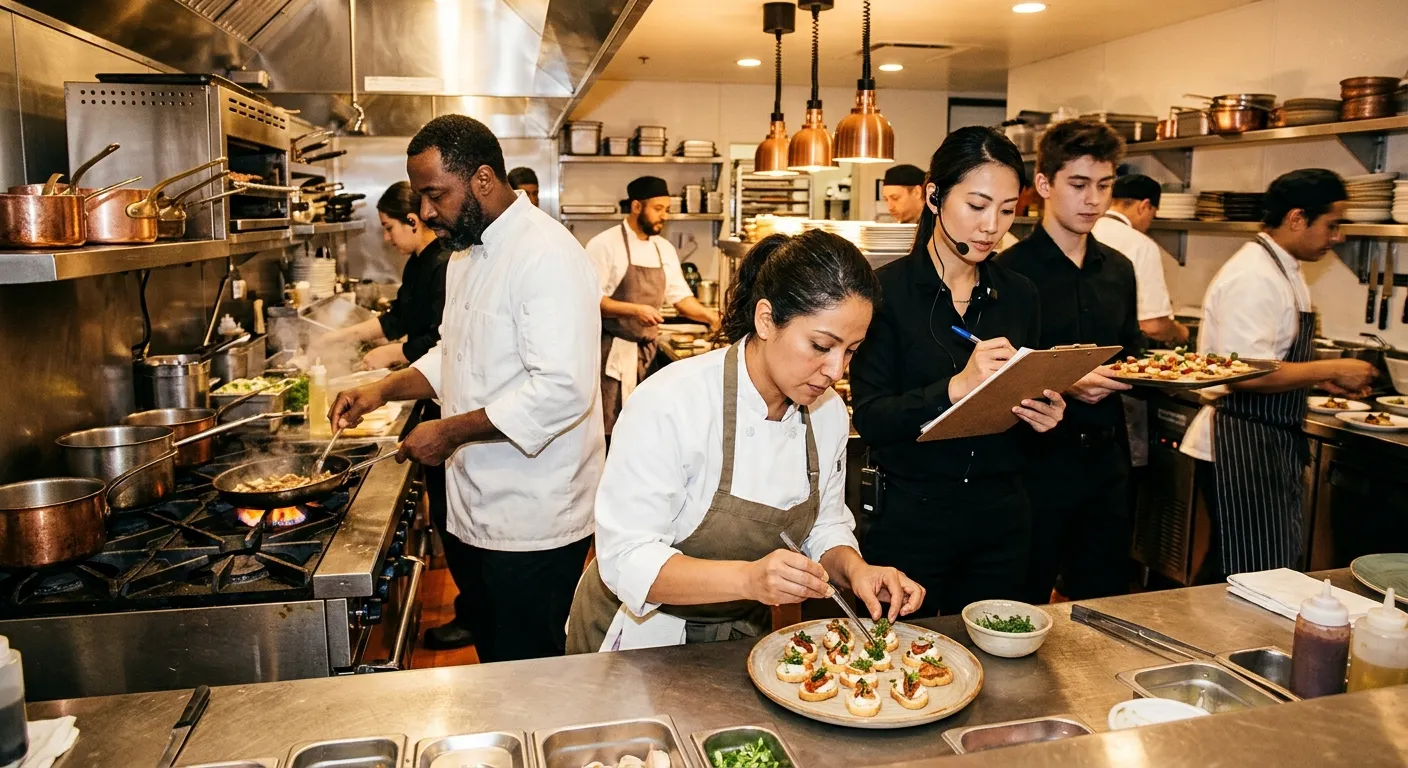
Multi-Category Overview: Deconstructing Food Production
What Is Food Production Experience? A Detailed Breakdown
Food production experience refers to the comprehensive, hands-on knowledge and practical skills required to transform raw ingredients into finished, service-ready food items, consistently, safely, and efficiently. It spans the entire culinary workflow, from procurement and warehouse logistics to final plating and presentation.
This is not merely cooking. It's a systematic operation involving menu planning, portion control, adherence to strict health & safety codes (like HACCP), inventory management, waste reduction, and team coordination. Whether you're staffing a pop-up festival bar or a permanent hotel kitchen, this experience is non-negotiable for quality and profitability.
The Non-Negotiable Skill Set
- Technical Proficiency: Mastery of cooking techniques (sauté, braise, grill, bake), knife skills, and equipment operation (combi-ovens, blast chillers).
- Safety & Hygiene Compliance: In-depth knowledge of food safety laws, allergen control, and cross-contamination prevention. Critical for any temporary catering role.
- Volume & Pace Management: Ability to produce hundreds of identical covers under time pressure, a hallmark of event catering staff.
- Mise en Place & Organization: The philosophy of"everything in its place" to ensure seamless service during peak hours.
- Adaptability & Problem-Solving: Reacting to supplier issues, last-minute menu changes, or equipment failure without compromising service.
Hiring for Production Excellence
Identifying true food production experience requires moving beyond the CV. It involves behavioral interview questions, practical skills tests, and verifying references from high-pressure environments. Partnering with a specialist Kitchen Staff Recruitment Agency in London or elsewhere provides pre-vetted candidates who have been assessed on these exact competencies.
For urgent needs, such as short-term catering jobs, agencies can match you with professionals who have proven track records in similar fast-paced scenarios, ensuring you don't sacrifice quality for speed in your hiring process.
Why Food Production Experience is Your Ultimate Business Advantage
Operational Efficiency & Cost Control
Experienced staff minimize waste through precise portioning, effective stock rotation, and proactive ordering. This directly boosts your gross profit margins. A team skilled in production is an investment that pays for itself, much like the strategic planning outlined in our guide to hiring a Head Chef.
Guaranteed Safety & Compliance
One food safety incident can destroy a reputation. Staff with certified food production experience are trained in HACCP, allergen management, and hygiene protocols, providing a robust defence against risks. This is as critical in a main kitchen as it is for bar staff handling food in a pub or event setting.
Scalability for Events & Seasonality
Whether it's a seasonal Winter Wonderland event or a sudden corporate gala, a team with production experience can scale output up or down seamlessly. They understand how to manage workflow to meet fluctuating demand without compromising quality, a key trait for any Event Bar Staff Agency professional.
From Kitchen Porter to Head Chef: The Experience Spectrum
Food production experience is not monolithic; it's a cumulative journey. A Kitchen Porter gains foundational experience in cleanliness, waste management, and kitchen flow. A Commis Chef learns basic preparation and cooking techniques. A Sous Chef masters section management, ordering, and quality control.
The pinnacle, the Head Chef, synthesizes all this into menu engineering, financial management, and team leadership. Recognizing this spectrum allows for targeted hiring—you might need experienced porters for a large-scale clean-down after an event, or a strategic head chef for a new restaurant launch. Platforms like Catering Jobs cater to all these levels.
Pro-Tip: Assessing Practical Experience
Don't just ask"Where have you worked?" Ask"Describe a time you had to produce 200 covers in two hours. What was your system?" or"How do you organize your section for a 12-hour wedding service?" The answers reveal their practical, applied food production experience. For high-volume roles, consider a timed practical test on basic butchery or vegetable prep.
Master the Art of Agile Hiring
Building a flexible, skilled food production team is the biggest challenge in hospitality. Learn how leading businesses leverage modern staffing strategies to navigate peak demand and event volatility.
Integrating Food Production Staff into Your Existing Team
Onboarding & Cultural Fit
A chef with impeccable production experience can still fail if they don't integrate with your team's culture. Effective onboarding for temporary or permanent hires should include shadowing sessions, clear briefings on your standard operating procedures (SOPs), and introduction to key team members. This is a specialty of agencies offering comprehensive recruitment solutions; they ensure candidates are not only skilled but also a good cultural match.
For example, a candidate placed for premier hospitality roles will be briefed on the specific expectations and pace of that venue, ensuring a smoother start.
The Role of Technology & Specialized Agencies
Modern food production isn't just about physical skill; it involves digital inventory systems, scheduling apps, and communication platforms. When you post a job through a specialized platform, you're not just advertising a vacancy—you're tapping into a network pre-screened for both technical and technological adaptability.
An Event Bar Staff Agency, for instance, doesn't just provide bodies; it provides professionals trained in specific POS systems, responsible service of alcohol, and the unique flow of event service, blending production knowledge with front-of-house excellence.
Frequently Asked Questions on Food Production Experience
Yes, but with caveats. Restaurant experience provides excellent foundational skills. However, event catering requires an additional layer of logistical planning, the ability to produce food in a temporary or off-site kitchen, and extreme scalability. The transition is common, but successful candidates usually need specific training or mentoring on event workflows. Sourcing from an Event Catering Staff agency is ideal, as they specialize in this crossover skill set.
Go beyond reference checks. Ask for a portfolio of menus they've executed, photos of their sections or plated dishes, or certificates from specific safety or equipment courses. In interviews, use scenario-based questions:"The delivery of protein is 3 hours late for a wedding. What's your plan?" Partnering with a professional Catering Recruitment agency adds a layer of verification, as they conduct practical assessments and in-depth interviews before presenting candidates.
Absolutely. Temporary staffing is not just for covering sickness. It's a strategic tool for managing seasonal peaks, testing a candidate for a permanent role (temp-to-perm), or bringing in specialized skills for a short-term project (e.g., a vegan chef for a festival). A reliable Temporary Catering Staff Agency maintains a pool of professionals who are specifically experienced in hitting the ground running in new production environments, ensuring continuity and quality.
Specialization. A dedicated Catering Staff Agency understands the nuanced language of kitchens, the physical demands of the roles, the critical importance of safety certificates, and the unique pressures of event timelines. Their recruiters are industry-experts who can accurately assess a candidate's practical"food production experience" against your specific need, whether it's for a cold larder section or a live-action pasta station. This focus leads to faster, more accurate, and longer-lasting placements.
Ready to Transform Your Food Production Team?
Understanding What Is Food Production Experience is the first step. Taking action to hire the right talent is what separates successful venues from the rest. Whether you need a single skilled chef or an entire brigade for a major event, your solution starts here.
Need immediate cover? Browse our list of recently placed candidates or explore our full hospitality talent pool.
Case Study: Scaling Production for a 5,000-Guest Festival
A real-world example underscores the critical importance of targeted food production experience. A premier UK festival faced the monumental task of feeding 5,000 guests across three days with multiple dietary offerings. Their permanent kitchen team of 15 was insufficient for the scale.
The challenge wasn't just finding more chefs; it was finding chefs with specific experience in large-batch cooking, outdoor kitchen logistics, and stringent temporary event hygiene compliance. A generic job ad would have attracted restaurant chefs unprepared for the volume.
The solution was partnering with a specialist agency that provided a pre-assembled, vetted team of 25 temporary chefs and porters. Each candidate was selected based on proven experience in similar festival or large-scale catering environments. The result was a 40% reduction in food waste compared to the previous year and zero health & safety incidents, directly attributable to the team's specialized production knowledge.
Key Learnings
- Volume Specialization: High-volume production is a distinct skill set.
- Pre-Vetting is Crucial: Agencies saved 3 weeks of interview time.
- ROI on Experience: The specialized team's efficiency covered their cost.
Beyond the Kitchen: Cross-Functional Production Experience
Food production expertise isn't confined to chefs. True operational fluency requires these skills in supporting roles.
📦 Warehouse & Logistics
An experienced warehouse operative in a catering context doesn't just move boxes. They understand FIFO (First-In, First-Out) stock rotation for perishables, proper chilled/frozen storage protocols, and how to accurately pick orders for multiple kitchen sections to prevent service delays. Their role is the first critical checkpoint in the production chain.
When hiring for warehouse roles, ask about their experience with food-specific inventory systems and their knowledge of cold chain management. This prevents costly spoilage before food even reaches the kitchen.
🍸 Event Bar Staff with Food Knowledge
At a canapé reception or a gastropub, the bar team is part of the food production ecosystem. Experience here includes safe handling of garnishes, understanding allergen cross-contamination from glassware, and knowledge of menu items to make informed pairing recommendations.
An Event Bar Staff Agency that screens for this broader knowledge provides staff who enhance the overall culinary experience, not just serve drinks. They become an extension of the kitchen's brand.
The Financial Equation: Quantifying the Value of Experience
| Scenario | Staff Without Specific Production Experience | Staff With Targeted Production Experience | Net Impact |
|---|---|---|---|
| Large Wedding (200 Covers) | Higher food waste (15%), slower service pace, potential for cross-contamination. | Tight portion control (~5% waste), efficient workflow, adherence to allergen grids. | ~10% higher gross profit; reduced liability. |
| New Restaurant Launch | Inconsistent plating, frequent menu item 86's, low team morale due to disorganization. | Consistent output, effective mise en place, ability to troubleshoot supply issues. | Stronger reviews, repeat customers, stable kitchen culture. |
| Pop-Up Seasonal Event | Long customer queues, food safety risks in temporary setting, equipment misuse. | Rapid setup/breakdown, rigorous temp checks, familiarity with mobile kit. | Maximum covers served, zero health violations, vendor reputation enhanced. |
This table illustrates that"food production experience" is not an abstract quality—it's a measurable asset that directly impacts profitability, reputation, and operational smoothness. Investing in hiring for this experience, often through a specialized catering recruitment partner, yields a clear and calculable return on investment.
The Future of Food Production: Sustainability & Technology
Modern food production experience increasingly incorporates two non-negotiable pillars: sustainable practice and tech integration.
Sustainability: It's no longer just about waste reduction. Experienced production chefs and managers now plan menus around seasonal, local produce to cut carbon footprints. They implement comprehensive recycling streams for packaging and food waste, often turning waste into compost or biofuel. This expertise is becoming a deciding factor for clients and guests alike.
Technology: From IoT sensors in fridges that alert to temperature fluctuations to AI-powered inventory software that predicts order volumes, the kitchen is digital. Food production experience now includes the ability to use these tools. When you hire through modern platforms, you can specify needs like"experience with ChefTec or MarginEdge" to find candidates who can leverage data to drive production efficiency from day one.
Your Next Step: A Practical Hiring Checklist
Use this actionable list to refine your hiring process for food production roles.
- 1 Define the 'Production Environment' Precisely: Is it a permanent à la carte kitchen, a high-volume event marquee, or a fast-paced corporate canteen? This is your first filter.
- 2 Craft Scenario-Based Interview Questions: Move beyond"Can you make béarnaise?" to"How would you produce 300 servings of béarnaise to be held at perfect consistency for 4 hours of service?"
- 3 Mandate a Practical Skills Test: For key roles, a 30-minute test (e.g., breaking down a salmon, preparing a mother sauce, setting up a station) reveals more than any CV.
- 4 Verify Certifications & Ask for Evidence: Check Food Hygiene Level 3, HACCP, and Allergen Awareness certificates. Ask for photos or menus from past high-pressure events.
- 5 Partner with a Specialist: For critical or volume hires, engaging a specialist agency outsources steps 1-4, giving you a shortlist of candidates whose production experience is already validated.
Mastering the intricacies of food production experience is what enables businesses to execute flawlessly, scale confidently, and profit sustainably. It is the bedrock of culinary service.

