Your Complete Guide to Hiring & Becoming a Junior Pastry Chef in 2026
Essential skills, career pathways, and expert hiring strategies for the UK's dynamic hospitality sector.
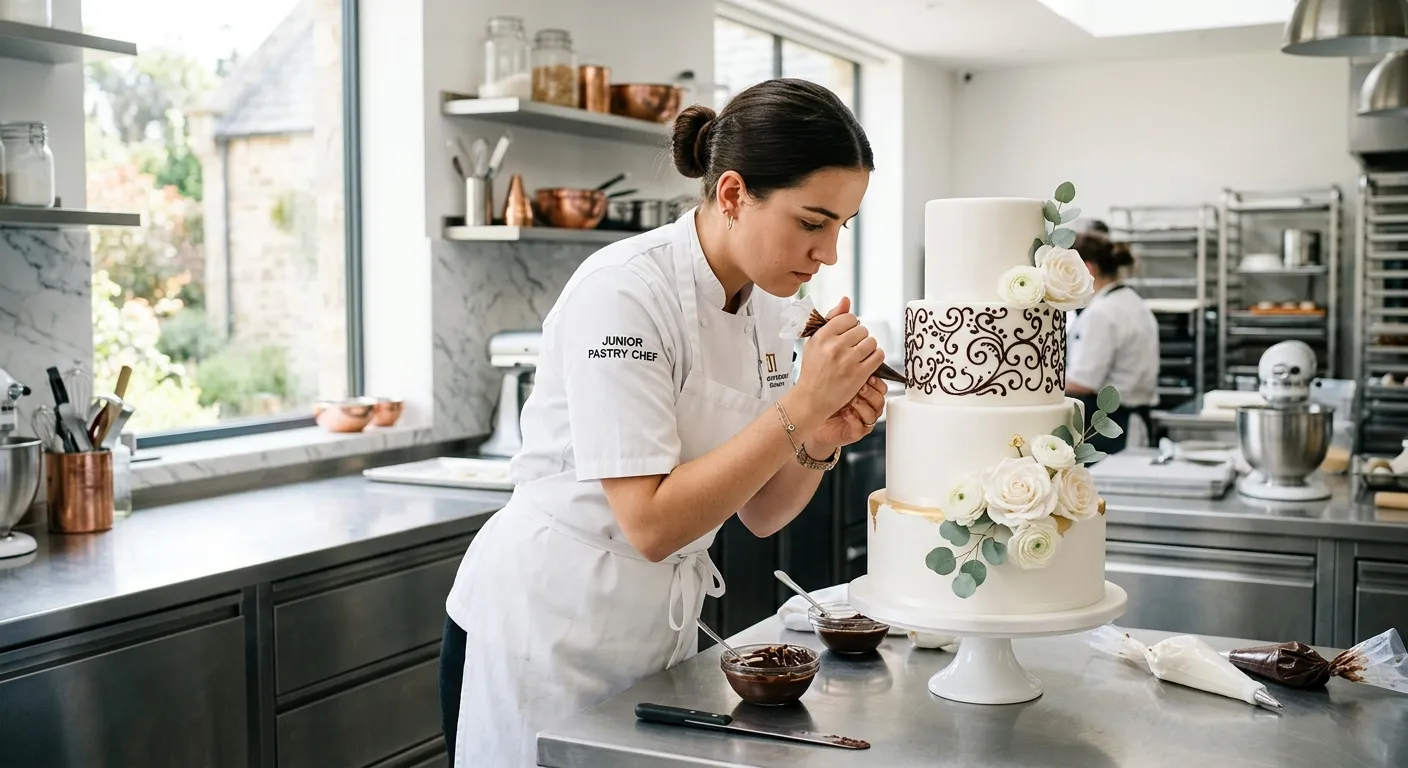
A Junior Pastry Chef is the vital foundation of any successful patisserie, bakery, or high-end restaurant kitchen. This entry to mid-level role bridges the gap between culinary education and professional mastery, responsible for executing core recipes, maintaining impeccable standards, and supporting senior pastry staff. In today's market, hiring a skilled Junior Pastry Chef requires understanding not just their technical duties—from laminating croissant dough to tempering chocolate—but also their career aspirations and the modern hiring landscape shaped by specialist catering staff agencies.
For businesses, finding the right candidate is about more than filling a vacancy; it's about investing in the future of your culinary brand. For aspiring chefs, it's the first critical step on a ladder that can lead to roles like Pastry Sous Chef or Executive Pastry Chef. Whether you're a restaurant in Manchester seeking talent or a graduate from a culinary school, this guide provides the definitive 2026 blueprint.
Why a Junior Pastry Chef is Essential for Your Business
Foundation of Consistency
They ensure daily production of bread, pastries, and dessert components meets exacting standards, maintaining the brand's reputation for quality that customers rely on.
Innovation & Fresh Ideas
Often bringing recent training, junior chefs introduce contemporary techniques, trending flavors (e.g., yuzu, tonka bean), and modern dietary-conscious recipes to the menu.
Scalability & Team Support
A competent junior chef allows senior pastry chefs to focus on complex creations, R&D, and management, effectively scaling your kitchen's creative output and operational capacity.
Cost-Effective Talent Pipeline
Investing in and nurturing a junior chef builds loyalty and creates a ready-made successor for more senior roles, reducing future external recruitment costs.
Operational Resilience
They provide crucial cover during peak periods, staff holidays, or unexpected absences, ensuring service continuity much like the support provided for large-scale event catering.
Cultural Energy
Their enthusiasm and desire to learn can reinvigorate a kitchen's culture, fostering a dynamic learning environment that benefits the entire hospitality team.
Core Skills & Responsibilities: The 2026 Benchmark
The role of the Junior Pastry Chef has evolved. Beyond basic baking, today's employers expect a blend of technical precision, digital savvy, and creative collaboration.
Essential Technical Competencies
- Fundamental Production: Mastery of doughs (laminated, enriched, lean), custards, creams, meringues, basic chocolate work, and daily bread production.
- Plating & Presentation: Ability to execute dessert plating to chef's specifications with speed and consistency during service.
- Equipment Proficiency: Safe and efficient use of planetary mixers, deck ovens, combi ovens, blast chillers, and precision scales.
- Mise en Place & Organization: Flawless preparation, labeling, and stocking of all required ingredients and components for service.
- Sanitation & Food Safety: Rigorous adherence to HACCP principles, allergen control, and kitchen hygiene protocols.
Pro-Tip for Employers
When interviewing, ask for specific examples of how they've handled a"bake-off gone wrong." Their problem-solving process reveals more about their practical knowledge and resilience than a perfect theoretical answer. This is a key tactic used by top kitchen staff recruitment agencies to assess real-world competency.
The Modern Skill Additions
The contemporary Junior Pastry Chef must also be conversant with:
- Sustainability Practices: Minimizing waste through creative use of leftovers (e.g., fruit trimmings for syrups, bread for pudding).
- Dietary Specialization: Understanding gluten-free, vegan, and allergen-free baking formulations.
- Basic Digital Literacy: Using kitchen management software for ordering, inventory, and recipe costing.
These expanded skills make them not just a pair of hands, but a strategic asset. Finding candidates with this broader mindset is where specialized recruitment shines, much like sourcing for niche roles such as a Catering General Manager, where business acumen is as important as operational skill.
Hiring Process & Interview Questions
A structured hiring process is critical. After sourcing candidates—ideally through a targeted Hospitality Agency Manchester or national catering recruitment partner—a two-stage interview is recommended.
Stage 1: Technical & Behavioral Interview
- "Walk us through your process for laminating croissant dough from start to finish. What are the critical control points?"
- "Describe a time you were under extreme pressure during service. How did you manage your station and communicate with your team?"
- "How do you stay updated with current pastry trends, and can you give an example of one you'd like to incorporate here?"
Stage 2: Practical Skills Test
A short, timed assessment is invaluable. Ask the candidate to:
- Prepare a basic pâte sucrée and blind bake it to assess technique.
- Pipe a consistent set of rosettes or write with chocolate to evaluate fine motor skills.
- Scale and mix a simple cake batter, demonstrating accuracy and organization.
This video explains the common bottlenecks in hiring and how a strategic partnership can compress timelines dramatically, a principle that applies perfectly when you need to hire a Junior Pastry Chef before a major seasonal push, similar to staffing up for a large-scale seasonal event.
Salary Expectations & Career Progression Roadmap
£22k - £28k
Typical Starting Salary (UK, 2026)
Varies by location & establishment
2-4 Years
Typical Tenure Before Promotion
To Pastry Chef de Partie
£35k+
Potential Salary as Pastry Sous Chef
With experience & proven skill
Career progression is rarely linear but follows a general trajectory of increasing responsibility. A motivated Junior Pastry Chef in a supportive environment, possibly found through a platform like premier hospitality groups, can advance within 2-4 years to a station chef role (Chef de Partie). Key to advancement is proactive skill acquisition—seeking out training in sugar sculpture, advanced chocolate conching, or even basic patisserie business management.
The Importance of Mentorship
The single greatest accelerator for a junior chef's career is working under a talented and willing mentor. Employers should facilitate this relationship; it improves retention, skill transfer, and ultimately strengthens the entire kitchen brigade. This philosophy of development is central to long-term expert talent solutions.
Frequently Asked Questions (FAQ)
A Commis Chef is a generalist entry-level role across the entire kitchen (saucier, larder, etc.). A Junior Pastry Chef is specialized from day one, working exclusively within the patisserie section. Their training is focused on baking science, pastry-specific techniques, and dessert production. The roles require different skill sets and career paths.
A specialist Hospitality Agency Manchester or national equivalent maintains a pre-vetted database of candidates with verified references and skills. They understand the specific pressures of pastry kitchens and can match not just technical ability, but also cultural fit. They manage the entire initial process—advertising, screening, first interviews—presenting you with only the most qualified candidates, often within days. This is as crucial for a permanent pastry role as it is for securing urgent logistics staff for a different sector.
The primary challenges include: Physical & Mental Stamina: Long, early hours in a demanding environment. Precision Under Pressure: Baking is a science; mistakes are costly and visible. Continuous Learning Curve: The field is vast, and techniques are constantly evolving. Finding the Right Mentor: A poor teacher can stifle growth. Employers can mitigate these by fostering a supportive culture, providing clear feedback, and investing in training—principles outlined in resources like our guide to temporary agency work which, while focused on temp roles, emphasizes foundational support structures.
A temporary-to-permanent arrangement is increasingly popular and low-risk. It allows both parties to assess fit without long-term commitment. You can evaluate their practical skills, teamwork, and adaptability to your kitchen's pace during a real-world trial period. This model is a core service of quality staffing agencies, applicable across sectors from pastry to warehouse operations. If the trial is successful, transitioning to a permanent contract is seamless.
Ready to Find Your Ideal Junior Pastry Chef?
Stop sifting through unqualified CVs. Leverage our network of pre-vetted culinary talent and our expertise in the hospitality sector to find the perfect match for your kitchen's culture and needs. Whether you're a Michelin-starred restaurant, a boutique hotel, or a high-street patisserie, we connect you with the passionate, skilled pastry professionals who will drive your dessert menu forward.
Need to fill other critical roles? Our expertise extends across the entire hospitality and catering spectrum. Discover how we can support your complete staffing strategy.
A Day in the Life: The Realities of a Junior Pastry Chef
Understanding the daily rhythm and pressures of this role is crucial for both employers setting expectations and candidates preparing for the reality. It's a role defined by early starts, precision, and constant motion.
The Typical Shift Timeline (Fine Dining Restaurant)
The Foundation & Production Block
The shift begins in a quiet kitchen. The Junior Pastry Chef's first tasks are"foundation bakes": preparing doughs that require proofing time (e.g., brioche, croissants), par-baking tart shells, and starting large-batch items like cake bases or crème pâtissière. Mise en place for the day's service is organized with military precision.
Assembly, Finishing, & Detail Work
As senior staff arrive, the pace shifts. This block is for assembly and delicate work: layering entremets, glazing tarts, piping fillings, and crafting intricate decorative elements like chocolate curls or sugar glass. The Junior Chef works from detailed"cartes" (recipe cards), ensuring every component meets the exact weight and dimension specifications. This is where technical skill is paramount.
Pre-Service & Lunch Rush
The kitchen transitions to service mode. All plated desserts are"dressed" and stored at perfect temperature. During lunch service, the Junior Chef supports the pass, ensuring plates are finished and sent out swiftly. They also manage replenishment of the pastry section, clean as they go, and begin prep for the following day—a skill often honed through roles found via a flexible part-time catering job that teaches adaptability.
Deep Clean & Strategic Prep
After service, the section is broken down and deep-cleaned. Equipment is sanitized, surfaces are scrubbed, and waste is logged. The final hour is for"tomorrow's today": scaling dry ingredients, preparing pre-ferments, and reviewing production lists with the Pastry Sous Chef. This closing routine is as critical as the opening, ensuring a seamless start for the next team.
This demanding schedule highlights why resilience and time management are non-negotiable soft skills. Employers should assess a candidate's understanding of this flow, much as a Head Chef evaluates a candidate's grasp of brigade management.
Case Study: Transforming a Hotel Patisserie with Strategic Junior Hiring
The Langham Court Hotel, Bristol
Challenge: The hotel's in-house patisserie was struggling with inconsistent afternoon tea pastry quality and high staff turnover in the junior role. Senior chefs were bogged down in basic production, stifling menu innovation.
Solution: Management partnered with a specialist hospitality recruitment agency to redefine the role. Instead of seeking a generic"junior," they crafted a profile for a"Junior Development Pastry Chef" with an emphasis on creativity and a structured 18-month mentorship program. The agency provided three candidates who had not only technical skills but also portfolios showcasing personal creative projects.
Outcome: The hired chef, within 6 months, proposed and helped launch a"Modern British Twist" afternoon tea series, featuring items like a rosemary & blackberry financier. This innovation, driven from the junior level, increased patisserie revenue by 23% and reduced senior chef overtime by 15%. The clear career path improved retention, and the hotel now uses this model as a blueprint for other kitchen roles.
"The right junior hire isn't a cost; it's an R&D investment. They brought fresh eyes and technical enthusiasm that reinvigorated our entire section. Using a specialist agency was key—they understood the niche we needed to fill." – Executive Pastry Chef, Langham Court
Key Takeaways for Employers
- Invest in a structured development plan to attract ambitious talent.
- Look beyond current skill checklists for demonstrated creativity and problem-solving.
- Partner with recruiters who understand culinary culture and long-term potential, not just CV keywords.
The Financial Justification: Calculating ROI on a Junior Pastry Chef Hire
Beyond salary, hiring a Junior Pastry Chef has a tangible return on investment (ROI) that can be quantified. Consider these operational cost savings and revenue generation points:
Cost Avoidance & Efficiency
- Reduced Overtime: Delegating foundational tasks can cut senior chef overtime by 10-20 hours per week, saving thousands annually.
- Lower Wastage: A diligent junior chef properly scaling, wrapping, and storing ingredients can reduce food cost by 2-5% through strict adherence to procedures.
- Decreased Recruitment Fees: Promoting from within when a senior role opens avoids expensive external headhunter fees, often 15-25% of the annual salary.
Revenue Enhancement
- Increased Output: Enables the patisserie to take on additional external orders (e.g., wedding cakes, corporate gifts) without compromising core service.
- Menu Innovation Speed: With senior chefs freed for R&D, new menu launches can occur more frequently, driving customer repeat business.
- Brand Reputation: Consistent quality and occasional"wow" factor from junior-led specials enhance online reviews and word-of-mouth marketing.
When these factors are modelled, a £26k junior hire can deliver a positive ROI within their first year. This strategic view aligns with the data-driven approach used in hiring for complex operational roles like a Logistics Manager.
Future-Proofing the Role: Trends Shaping the Next 5 Years
The skills demanded of a Junior Pastry Chef in 2026 are just the beginning. Forward-thinking employers and ambitious chefs must prepare for these evolving trends.
Hyper-Personalization & Tech Integration
The rise of dietary tracking apps and AI-driven nutrition will push patisseries towards even more personalized offerings. Junior chefs will need to be adept at using software for recipe modulation—instantly adjusting a base recipe for macros, allergens, or specific dietary regimes (e.g., keto, low-FODMAP). Familiarity with digital design tools for 3D-printed chocolate molds or intricate stencils will move from novelty to valuable skill.
Closed-Loop Sustainability
Beyond using trimmings, the next wave involves "root-to-stem" sweet cookery and active waste auditing. Junior chefs may be responsible for managing on-site composting, cultivating kitchen mycoprotein from coffee grounds, or creating natural dyes and flavors from would-be waste. This transforms the role from purely production to include aspects of circular economy management, a shift mirrored in broader corporate catering demands.
The"Phygital" Brand Ambassador
Junior chefs will increasingly be the on-camera talent for a kitchen's social media content, demonstrating techniques or explaining the story behind a dessert. Basic content creation skills—smartphone videography, food styling for digital platforms, engaging succinctly with an online audience—will become an asset. They become a bridge between the physical product and the digital brand, driving engagement and direct sales.
Actionable Steps for 2026 Preparedness
For Employers:
- Include"adaptability to new tech" and"sustainability mindset" in your 2026 job descriptions.
- Budget for annual upskilling courses for junior staff in these emerging areas.
- Develop a clear policy and provide tools for social media content creation by kitchen staff.
For Aspiring Chefs:
- Take a free online course in food photography or basic nutrition science.
- Start a personal recipe blog or Instagram focused on a niche (e.g., vegan French patisserie) to demonstrate initiative and digital skill.
- In interviews, ask employers about their sustainability policies and tech adoption plans to assess their forward-thinking mindset.

