Telehandler Operator jobs in Reading RG2 — Immediate Start with Catering Jobs
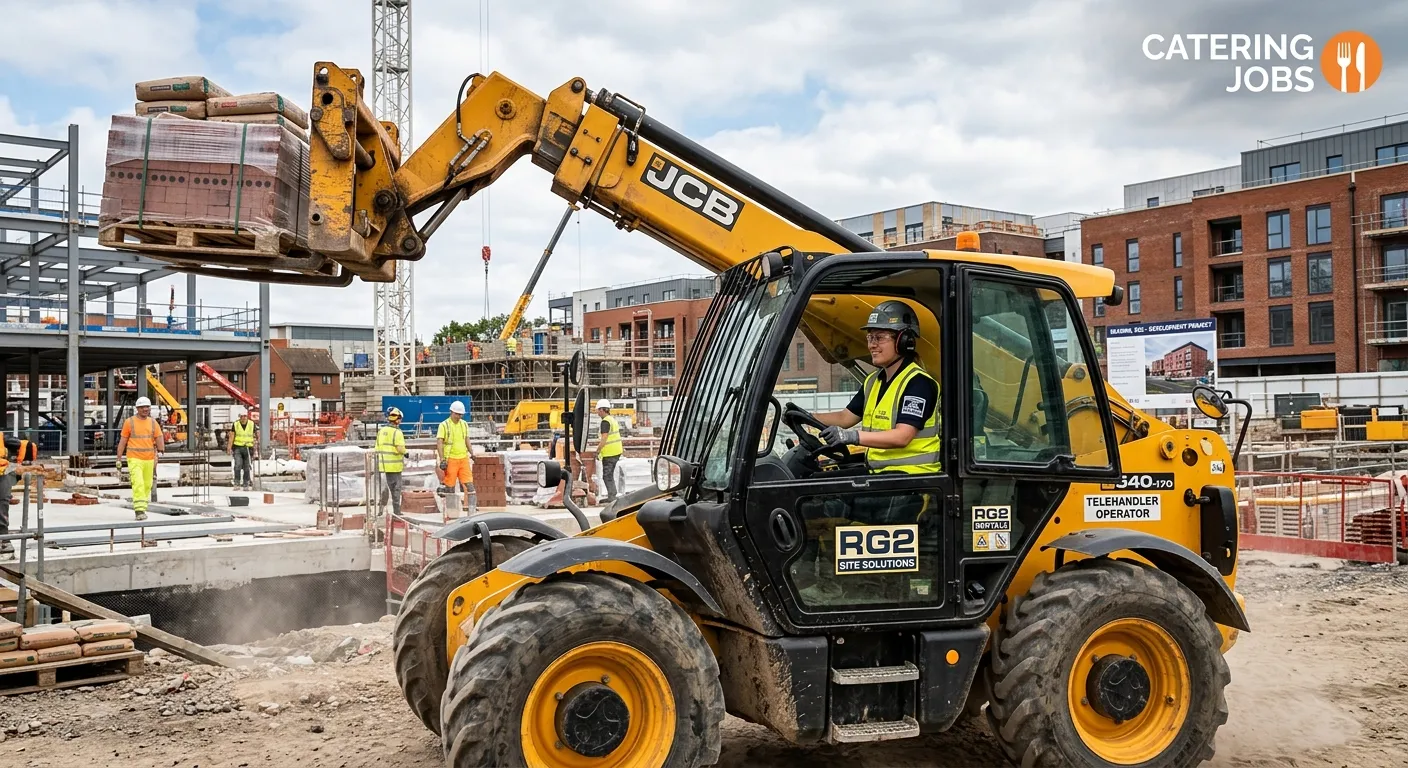
Why Reading RG2 is a Hub for Telehandler Talent
Reading, particularly the RG2 postcode encompassing areas like Whitley and South Reading, is undergoing a significant transformation. It's not just the bustling town centre; the industrial and commercial peripheries are booming. The demand for skilled plant operators, especially telehandler operators, is driven by several major factors. Understanding this landscape is key for any operator looking to secure long-term, rewarding work.
Major Infrastructure Projects: Reading sits at the heart of key transport corridors. Ongoing and planned work on the M4, rail network upgrades, and local road improvements require substantial material handling. Telehandlers are indispensable on these sites for moving pallets of materials, placing concrete barriers, and handling drainage pipes.
Thames Valley Business Park Expansion: RG2 is a stone's throw from major business parks like Green Park and Thames Valley Park. The constant development of commercial units, logistics warehouses, and office spaces creates a perpetual need for construction and fit-out crews. Your role could involve unloading curtain siding, placing roofing materials, or handling interior fit-out components.
The Residential Construction Boom: From large-scale housing developments to individual property extensions, Reading's growing population demands new homes. On a housing site, a telehandler operator's day is diverse: delivering bricks and blocks to masons, placing roof trusses with precision, moving skips, and handling landscaping materials.
A Day in the Life: The RG2 Telehandler Operator
Let's move beyond the generic job description. What does a real day look like for a telehandler operator placed by Catering Jobs on an RG2 site? Your morning starts with a site induction and a thorough pre-use check of your machine—tyre pressure, fluid levels, controls, and safety systems. You’re not just a driver; you’re the first line of defence for machine safety.
The site foreman briefs you on the day’s tasks: offloading three articulated lorries of bagged aggregate and distributing it to three different stockpiles around the site, followed by assisting the carpentry team with placing prefabricated wall panels. This requires constant communication via your radio, meticulous planning of your routes to avoid ground personnel and other plant, and expert load management. The afternoon might involve using a fork attachment to move palletised bricks, then quickly switching to a bucket to move and level a base for a temporary site office. The variety is constant, demanding both skill and adaptability.
Beyond the CPCS Card: The Skills That Make You Indispensable
While a valid CPCS or NPORS card is your ticket to the site, it's the deeper skills that secure repeat work and top rates. Catering Jobs values and promotes operators who demonstrate these advanced competencies.
Advanced Operational Proficiency
- Attachment Mastery: True expertise means being proficient with more than just forks. Can you efficiently operate a brick grab, a jib, a winch, or a sweeper? Each attachment changes the machine's dynamics and safe working load.
- Working in Confined Spaces: RG2 sites can be tight. The ability to manoeuvre a large machine with millimetre precision, using all mirrors and sometimes a banksman, is a prized skill.
- Load Integrity & Security: It’s not just about picking up a load, but understanding how to secure it, how it affects the machine's stability during travel, and how to place it without damage or danger.
Site Citizenship & Soft Skills
- Proactive Communication: The best operators are in constant dialogue with ground teams, foremen, and other plant operators. They anticipate needs and warn of potential hazards.
- Basic Machine Awareness: Noticing a minor hydraulic leak, a strange sound, or a drop in performance and reporting it immediately prevents costly downtime and accidents.
- Initiative and Problem-Solving: When a delivery is in the wrong location, can you safely devise a solution? When access is blocked, can you suggest an alternative plan? This mindset marks you out as a leader.
Case Study: The Green Park Logistics Hub Project
To illustrate the critical role you could play, consider a recent project where Catering Jobs supplied plant operatives for a new 150,000 sq ft logistics hub in Green Park, Reading.
The Challenge: A fast-track build schedule with multiple trades working simultaneously. The key bottleneck was the cladding phase—getting vast quantities of composite panels from the delivery point to the building face safely and efficiently, across uneven, partially finished ground.
The Solution: Catering Jobs placed two experienced telehandler operators with specific experience in cladding work. They operated machines with high-reach capabilities and rotating fork attachments. Their deep understanding of load swing dynamics and their ability to work in close coordination with the cladding teams—guided solely by hand signals in noisy environments—was crucial.
The Outcome: The cladding phase was completed three days ahead of schedule, with zero damage to materials or safety incidents. The site manager specifically commended the telehandler operators for their"unflappable professionalism and precision," and requested them by name for the next phase of work. This is the standard we work to achieve with every placement.
Navigating Certification: CPCS vs. NPORS & The"Competent Operator" Status
Confusion around cards can cost you work. Let's clarify. Both CPCS (Construction Plant Competence Scheme) and NPORS (National Plant Operators Registration Scheme) are widely accepted in Reading RG2. CPCS is often seen as the industry gold standard, especially for larger contractors, while NPORS offers flexibility, including in-house training.
The critical shift in recent years is the move from a"trained" to a"competent" operator designation. A red CPCS card (trained) requires constant supervision. A blue CPCS card (competent) proves you have the experience and knowledge to work independently. Achieving this typically requires passing a vocational achievement test (often an NVQ). Catering Jobs strongly advises all operators to work towards their blue card or NPORS equivalent—it significantly increases your earning potential and employability on RG2's top-tier sites.
We can advise you on approved local training centres in the Berkshire area to help you upgrade your certification, ensuring you remain competitive and compliant with evolving industry standards.
The Catering Jobs Difference: More Than Just a Payroll Number
Many agencies can find you a job. Catering Jobs builds your career as a plant operator in the Reading area. Our model is based on partnership and deep local knowledge.
1. Dedicated Plant Specialist
You are assigned a consultant who is an expert in the plant sector. They understand the machines, the sites, and the contracts. They don't just fill a slot; they match your specific skills (e.g., experience with rotators, high-reach work) to the perfect RG2 site.
2. Pre-Vetted Site Network
We have long-standing relationships with the major principal contractors and sub-contractors across Reading. We know their safety cultures, their project pipelines, and their specific requirements, so you walk onto a site that's a good fit for you.
3. Career Pathway Support
Looking to move from telehandlers into crane operation? Need your First Aid at Work certificate? We provide guidance and can often facilitate access to training, helping you progress and increase your day rate over the long term.
Safety First: The Non-Negotiables for RG2 Sites
Safety is the absolute priority on every site we work with. As an operator, you are responsible for a powerful piece of equipment. The following are not just guidelines; they are the bedrock of professional operation.
- Thorough Pre-Start Checks: A signed and dated checklist isn't a paperwork exercise. It's a legal document and your proof of due diligence. We expect operators to spend a full 10-15 minutes on this every day.
- Strict Adherence to the Safe Working Load (SWL): The SWL chart is law. It changes with boom angle, extension, and attachment."She'll be right" is an attitude that leads to catastrophic failure. We only work with operators who respect the limits of their machine.
- Zero Tolerance for Unsafe Practices: This includes carrying unauthorized passengers, using mobile phones while operating, bypassing safety systems, or working without a banksman in a blind-spot situation. Any breach reported to us will result in immediate suspension from our books.
- Site-Specific Risk Awareness: Every RG2 site is different. Overhead power lines, unstable ground, public footpaths at the perimeter, and the presence of numerous ground workers all present unique hazards. Dynamic risk assessment—constantly scanning and evaluating—is a required skill.
Maximising Your Earnings as an RG2 Telehandler Operator
Your earning potential with Catering Jobs in Reading isn't fixed. It's a direct reflection of your skills, attitude, and flexibility. Here’s how top operators maximise their income.
Specialist Attachment Proficiency: As mentioned, operators certified and experienced in using non-standard attachments (e.g., crane jibs, grabs) can command a premium rate of £2-£4 more per hour due to their versatility solving specific site problems.
Shift Flexibility: Many large RG2 projects run extended hours or weekend shifts to meet deadlines. Being available for early starts, late finishes, or Saturday work often comes with enhanced pay rates. We always notify our operators of these premium opportunities first.
Long-Term Assignments vs. Short-Term Gigs: While immediate start short-term work is available, committing to a longer-term project (3-6 months+) often provides greater income stability and can sometimes be negotiated at a favourable rate. It also builds a strong relationship with a specific contractor, leading to direct offers in the future.
Demonstrating Leadership: Operators who show initiative, help mentor newer staff, and contribute positively to site culture are the ones site managers request by name. This reputation makes you the first call for the best-paid, most responsible roles on subsequent projects.
The Application & Onboarding Process: Fast, Efficient, Transparent
We've streamlined our process to get you from application to site in the shortest possible time, without cutting corners on compliance.
- Initial Consultation: A 15-minute phone call with our plant specialist to discuss your experience, cards, preferences, and immediate availability.
- Compliance Submission: You'll receive a secure link to upload all necessary documents: CPCS/NPORS card, CSCS card, proof of right to work, and references. Our digital system verifies these quickly.
- Site Matching & Briefing: We match your profile to live opportunities. You'll receive a detailed briefing on the client, site location, project type, duration, rate, and any specific site rules (e.g., parking, start times).
- Fast-Track Onboarding: For many of our trusted RG2 clients, we have pre-approved supplier status. This means you can often start within 24-48 hours of compliance clearance, as the client trusts our vetting process.
- First Day Support: Your consultant will call you on your first morning to ensure you've arrived, the point of contact is clear, and everything is as expected. We're here to smooth the path.
Future-Proofing Your Career: The Evolution of Plant Machinery
The plant industry is not static. Reading's forward-thinking construction sector is beginning to adopt new technologies. Being aware of these trends positions you as a forward-looking operator.
Telematics and Machine Monitoring: Many new telehandlers are fitted with systems that track fuel usage, idle times, load weights, and operational efficiency. Employers value operators who understand this data reflects their performance and who operate in a fuel-efficient, machine-conscious manner.
Hybrid and Electric Machines: To meet sustainability targets on major projects, quieter, zero-emission electric telehandlers are starting to appear, especially on inner-city sites or sensitive environmental projects. Familiarity with their charging requirements and different performance characteristics will be a future asset.
Enhanced Safety Systems: Proximity sensors, 360-degree camera systems, and automatic load moment indicators are becoming more common. These are aids, not replacements, for skilled operation. The best operators learn to integrate this technology seamlessly into their existing safe working practices.
By partnering with Catering Jobs, you gain an agency that is tuned into these developments. We provide updates on new machine types appearing on local sites and can advise on any supplemental familiarisation training that might be beneficial, ensuring your skills remain in high demand for years to come.
Ready to Operate at Your Peak in Reading RG2?
If you are a skilled, safety-conscious telehandler operator looking for immediate, rewarding work with an agency that truly understands your profession, your search ends here. Catering Jobs is your direct link to the best sites in Reading.
Contact our Plant Team Today: 0118 123 4567
Or email your CV to: [email protected]
Immediate starts available. Let's build the future of Reading, together.
Essential Kit and PPE for the RG2 Telehandler Professional
Turning up with the right personal equipment is a mark of a serious operator. Beyond the standard high-vis vest and hard hat issued by most sites, the pros who get called back bring their own, superior gear. This not only enhances your safety and comfort but also demonstrates a professional investment in your role. For the variable Berkshire weather and the demanding environment of an RG2 construction site, consider this your essential kit list.
Footwear: Safety boots (EN ISO 20345:2011) with a defined steel toe cap and midsole penetration resistance are mandatory. However, for telehandler operators who are in and out of the cab frequently, look for boots with superior ankle support, oil-resistant soles, and waterproofing. A quality pair with good grip can prevent slips when dismounting on muddy or greasy surfaces, a common hazard around plant yards and delivery areas.
All-Weather Clothing: Layering is key. A moisture-wicking base layer, a thermal mid-layer, and a waterproof, breathable outer shell will see you through a Reading winter. In summer, high-vis, lightweight, long-sleeved tops protect from the sun and dust. Never be tempted to work in a vest alone; the cab can get extremely hot, but sunstroke and dehydration are real risks.
Hand Protection: While you may not be manually handling materials all day, a good pair of general-purpose work gloves (CE marked) are essential for pre-start checks (checking for hot or greasy components), handling attachment pins, and for any incidental manual tasks. Operators who also do their own basic attachment changes often carry a heavier-duty pair.
Personal Accessories: This is where the seasoned operator stands out. A high-quality, site-approved personal dust mask (FFP2/FFP3) for dusty operations like moving aggregate or in demolition phases. Safety glasses that fit comfortably over prescription eyewear for when you need to lean out of the cab in windy, dusty conditions. A durable, clip-on water bottle to ensure hydration throughout the shift without leaving the machine unnecessarily.
The Operator's Logbook and Tech: Beyond Pen and Paper
The traditional paper logbook is still prevalent, but digital is on the rise. A proficient operator treats this log not as a chore, but as a professional record. It's a legal document that provides a traceable history of the machine's operation, fuel usage, and any defects. When you record a minor issue at 10 AM, and it becomes a major failure at 3 PM, your logbook protects you. Some forward-thinking RG2 contractors now use tablet-based systems for daily checks and timesheets. Being comfortable with this basic technology—entering data accurately, taking a photo of a defect—is an increasingly valuable skill. Catering Jobs can provide familiarisation with common digital systems used by our key clients.
Understanding the RG2 Client: Who You'll Be Working For
The"client" isn't a monolith. Understanding the different types of companies operating in Reading RG2 helps you adapt your approach and expectations. Your conduct reflects on Catering Jobs, and building a good reputation with each type opens more doors.
Major Principal Contractors
Examples: National firms like Kier, Balfour Beatty, Morgan Sindall operating on large infrastructure or commercial projects.
Environment: Highly structured, with stringent safety protocols (often"Zero Harm" policies), extensive induction processes, and multiple layers of management. Paperwork and compliance are paramount.
Operator Advantage: Long-term project stability, excellent facilities (often superior canteens, welfare units), and opportunity to work on landmark projects. They often invest in the newest machinery.
Specialist Sub-Contractors
Examples: Groundworks firms, steel erectors, cladding companies, and landscaping specialists.
Environment: Faster-paced, more direct communication with the foreman or site owner. The focus is on productivity and meeting tight phase deadlines. You may be the only plant operator on site.
Operator Advantage: Greater variety of tasks, closer team integration, and the potential to develop a niche skill set (e.g., precise placement for steel erection). Your direct impact on the project's progress is highly visible.
Logistics & Warehouse Developers
Examples: Developers building the vast distribution centres around the M4/A33 corridors.
Environment: Characterised by huge scale, vast open spaces, and a primary focus on moving bulk materials (kerbs, drainage, hardcore) and handling pre-cast concrete panels.
Operator Advantage: Opportunity to operate high-capacity machines, develop skill in bulk material handling efficiency, and work on projects that have a very clear, linear progression.
Advanced Operational Scenarios and Problem-Solving
The true test of an operator comes not during routine tasks, but when faced with an unexpected challenge. Here are detailed scenarios based on real situations our operators have faced on RG2 sites, illustrating the advanced decision-making we value.
Scenario 1: The Unstable Ground Dilemma
Situation: You are tasked with retrieving a pallet of blocks from the far corner of a site after a week of heavy rain. The designated route is now soft, waterlogged ground. The foreman is pressuring you to"just get it done quickly" as the bricklayers are waiting.
Wrong Response: Attempting the crossing, assuming the machine's weight is distributed. This risks becoming bogged, destabilising the load, or worse, a roll-over.
Correct Professional Response: 1) Politely inform the foreman of the hazard and that a dynamic risk assessment prohibits the move. 2) Suggest and assess alternatives: Can the load be accessed from a different, firmer direction? Can temporary ground reinforcement (track mats, a bed of Type 1) be laid? 3) If no safe alternative exists, formally refuse the task until conditions improve, documenting the reason. This demonstrates ultimate professionalism and commitment to safety over expediency.
Outcome: A Catering Jobs operator faced this on a Whitley housing site. They suggested using spare scaffold boards to create a temporary path. The foreman agreed, the task was completed safely an hour later, and the site manager later thanked the operator for their proactive problem-solving that prevented a potential incident and machine downtime.
Scenario 2: The"Just One More" Load Request
Situation: You are placing roof trusses. The load is within the SWL for the first few placements, but as the boom extends further to reach the final truss position, you are at the limit of the chart. The carpentry foreman says,"It's the same weight, just place it there. The chart is too conservative."
Wrong Response: Complying to avoid conflict, operating beyond the stated SWL. This dangerously increases the risk of structural failure in the boom or a forward tip.
Correct Professional Response: 1) Firmly and politely state that the SWL is a non-negotiable limit based on the machine's physics, not a guideline. 2) Propose safe solutions: Can the truss be manually guided the last metre by the ground team? Can the machine be repositioned (even if it takes time) to bring the load within the chart limit? 3) Explain the consequence of failure—catastrophic for the machine, the load, and personnel below.
Outcome: On a project in South Reading, an operator insisted on repositioning the machine, adding 20 minutes to the task. The site supervisor witnessed this and later commended the operator to Catering Jobs, noting that such discipline was what they demanded from all personnel. That operator became their first choice for all delicate lifting work.
Health, Wellbeing, and Fatigue Management for Plant Ops
Operating heavy plant is physically and mentally demanding. Long shifts, constant concentration, vibration, and noise take a toll. The best operators manage their wellbeing to maintain peak performance and a long career. This is a topic rarely discussed but critical for sustainability.
Combating Physical Fatigue: Sitting in one position for hours can lead to back pain, poor circulation, and stiffness. Develop a micro-routine: every hour, when safe and parked, perform a set of seated stretches—neck rolls, shoulder shrugs, ankle circles. When dismounting for a break, take a two-minute walk to promote blood flow. Invest in a quality seat cushion if the machine's seat is worn; it's a small cost for long-term spinal health.
Managing Mental Fatigue: The need for constant situational awareness is draining. Techniques from professional drivers apply: practice systematic scanning (far ahead, mid-range, mirrors, repeat), which becomes an efficient habit rather than a conscious strain. Use quieter periods, like when waiting for a delivery, to mentally rest by focusing on your breathing for a minute, not your phone. This helps reset your concentration.
Nutrition and Hydration: Relying on site canteen food or sugary snacks leads to energy crashes. Pack a lunchbox with slow-release energy foods—wholemeal sandwiches, nuts, fruit, and plenty of water. Avoid heavy, greasy meals at lunch that induce lethargy. Dehydration directly impairs reaction time and decision-making; make a conscious effort to drink water regularly.
Noise and Vibration: Long-term exposure to cab noise and whole-body vibration is a health risk. Use ear defenders if the cab is not sufficiently sound-insulated (check the dB rating). Report excessive machine vibration immediately—it's not just uncomfortable, it's a sign of potential mechanical issues and a health hazard.
The Economics of Contracting: Understanding Your Pay and Rights
Working through an agency like Catering Jobs offers flexibility, but it's vital you understand the structure of your engagement. Transparency is our policy, so here’s a breakdown of what you need to know.
Pay Rates Explained: The advertised rate is typically an umbrella or PAYE rate. This is the gross amount before statutory deductions (Tax, NI, Pension Auto-Enrolment). As a contractor, you are not entitled to paid holiday or sick leave under the standard model; the rate reflects this. However, at Catering Jobs, we offer a range of payment solutions and can advise on which is most tax-efficient for your circumstances.
Key Legislation - The Conduct of Employment Agencies and Businesses Regulations 2003: These regulations protect you. They mandate that we must provide you with written terms (a Key Information Document) before you start work, detailing the rate, how you will be paid, and any fees or deductions. We cannot charge you a fee for finding you work. We must also pay you for all work done, even if the client hasn't paid us yet.
IR35 and Off-Payroll Working: For assignments in the public sector (e.g., work on a council-led project or a school build in RG2), the IR35 rules place the responsibility for determining your tax status on the client. If you are deemed"inside IR35," you will be taxed similarly to an employee. We handle all the complexity of this determination and will clearly explain the status and implications of any role before you start.
Working Time Directive: You have the right to opt out of the 48-hour average working week, which is common in construction. However, you also have the right to daily and weekly rest periods. We monitor hours worked to ensure you are not put in a position of dangerous fatigue and support your right to adequate rest.
Building Your Professional Portfolio and Reputation
In the digital age, your reputation can be built and showcased. A proactive operator doesn't just rely on an agency's word; they curate evidence of their expertise.
The Digital Log: Keep a simple, private record of every project: client name, site location, project type, machine model(s) operated, attachments used, and duration. Note any specific achievements:"Completed cladding phase ahead of schedule,""Trained new banksman on signals,""Identified and reported critical hydraulic leak." This isn't for public sharing, but for you to recall details when discussing new opportunities with us.
Testimonials and References: At the end of a successful assignment, it is perfectly professional to ask the site foreman or manager if they would be willing to provide a brief reference or testimonial. This can be a simple email stating your role, dates, and that your work was safe and professional. These can be invaluable. Catering Jobs also requests formal feedback after each placement, which builds your internal profile with us.
Continuous Learning Record: Maintain a folder (digital or physical) of all your certificates—CPCS/NPORS, CSCS, First Aid, PASMA, IPAF, etc. As you add new categories (like telehandler with crane jib) or renew them, keep it updated. We can store digital copies on your profile for quick submission to clients.
Case Study: Precision Work on the Reading Bridge Refurbishment
This case study highlights the need for precision and public safety awareness, a level above standard site work.
The Project: A major refurbishment of a key road bridge over the railway lines in East Reading. Work had to be conducted under strict rail possession times and with extreme care due to live rail lines and limited space.
The Challenge: Removing old, heavy concrete parapet units and placing new ones. The working area was a narrow, closed lane of the bridge. On one side was a temporary barrier and a 30-foot drop to the railway. On the other, live traffic. The telehandler had to operate within a width of less than 4 meters, with zero room for error.
The Catering Jobs Solution: We supplied an operator with a proven track record in confined spaces and a history of railway site safety training (PTS awareness). The machine was a compact rotating telehandler. The operator worked in tandem with a highly experienced banksman who was also the direct link to the rail lookout. Every movement was pre-planned and communicated via hand signals. The operator's skill in using the rotator attachment to precisely manoeuvre the parapet units in mid-air, rather than relying solely on machine movement, was critical.
The Outcome: The entire parapet replacement phase was completed without a single safety incident, delay to the rail network, or damage to materials. Network Rail's site representative highlighted the"exemplary discipline and coordination" of the plant operation. This project led to Catering Jobs being added to the approved supplier list for two other civil engineering contractors specialising in rail and highway work.
Networking and Community: The Berkshire Plant Operator Scene
Your career is supported by a community. Engaging with it can lead to tips, advice, and opportunities. Reading has a strong local network for construction professionals.
Local Training Centres: Building relationships with instructors at local CPCS/NPORS test centres (like those in Theale or near the M4) can provide insider knowledge on test changes and skill shortages. They often hear which agencies and contractors are busiest.
Trade Counters and Plant Hire Depots: The staff at national and independent plant hire shops in RG2 are a wealth of information. They know which machines are going out to which sites and often have a feel for which projects are scaling up.
Online Forums and Groups: While maintaining professionalism and confidentiality, UK-focused plant operator forums and local Berkshire construction groups on social media can be useful for general advice on regulations, rates, and reputable companies. Remember, never criticise a past employer or client publicly.
Catering Jobs' Operator Events: Periodically, we host informal meet-ups for our registered plant operatives. These are opportunities to network with peers in a relaxed setting, share experiences, and hear from us about upcoming major projects in the Thames Valley pipeline. It's about building a cohort of top-tier talent.
Your Next Step: Register with Catering Jobs' Plant Division
To access the projects, rates, and support detailed in this guide, you need to be on our dedicated plant operative register. Our registration process is thorough because our clients demand the best.
Online Profile
Complete our detailed skills matrix. The more information you give, the better we can match you.
Compliance Vetting
Our team verifies every certificate and right-to-work document to the highest standard.
Skills Verification Call
A 30-minute conversation with a plant specialist to discuss your experience in depth.
Live Opportunities
Once cleared, you receive tailored alerts for RG2 roles matching your profile.
Disclaimer: This guide is for informational purposes. Specific site rules, client requirements, and regulations supersede general advice. Rates are indicative and subject to market conditions, project specifics, and individual skill level. Always conduct your own dynamic risk assessment and adhere to the specific safe systems of work provided on each site. Catering Jobs acts as an employment business.
Mastering Machine-Specific Dynamics: From Compact Handlers to High-Reach Giants
Not all telehandlers are created equal. The Reading RG2 market demands operators who understand the nuances between different machine classes. Your ability to articulate your experience with specific models and capacities makes you a specialist, not a generalist. Here’s a breakdown of the common machines you’ll encounter and the unique skills each demands.
Compact Telehandlers (e.g., Merlo, Manitou 7-9m)
Typical RG2 Use: Interior fit-outs of commercial units at Thames Valley Park, smaller residential developments, landscaping projects, and warehouse maintenance. Their agility is their key asset.
Operational Nuances: These machines are often used in extremely confined spaces—inside buildings with low ceilings, between scaffolding, or in crowded yard areas. The operator must have an exceptional feel for the machine's tail swing and be adept at using multi-mode steering (often 2-wheel, 4-wheel, crab) to navigate tight corners. The load charts are less forgiving on smaller machines; a slight overreach can tip the stability threshold much quicker than on a larger model. Precision placement of delicate items like glass partitions or HVAC units is a common test of skill.
Catering Jobs Insight: We see high demand for compact handler specialists during the final phases of office builds in Green Park. Operators who can seamlessly work alongside electricians and ceiling fitters, placing materials exactly where needed without disrupting other trades, are requested repeatedly.
Standard/Large Telehandlers (e.g., JCB 541-70, JLG 1250)
Typical RG2 Use: The workhorses of major housing developments, logistics hub construction, and infrastructure projects like the M4 smart motorway upgrades. They handle bulk materials, concrete barriers, and roofing bundles.
Operational Nuances: Here, efficiency and cycle time are king. The operator must master smooth, fast travel over rough ground while maintaining load stability. Understanding how to use the boom's power float function when placing loads on the ground prevents shock loading and damage. On large, open sites, environmental factors become critical: operating in high winds requires extra caution with high or sheet-like loads. The ability to conduct quick but thorough daily inspections on these complex machines is vital, as downtime impacts entire site schedules.
Catering Jobs Insight: For the large-scale residential projects in South Reading, we look for operators with proven stamina and efficiency. The ability to move 200 pallets of blocks in a day, safely and without incident, following a logical pattern to minimise machine travel, is a measurable skill that site managers value highly.
High-Reach/Telehandlers with Crane Jibs (e.g., Models with 15m+ reach)
Typical RG2 Use: Steel frame erection, placement of pre-cast concrete panels on multi-storey builds, cladding of tall warehouses, and any scenario requiring precise vertical placement.
Operational Nuances: This is the pinnacle of telehandler operation, demanding a crane operator's mindset. Load swing management is paramount. The operator must use the controls to"feather" the load, counteracting pendulum motion. Understanding the combined effect of the main boom and the jib extension on the load chart is complex and non-negotiable. Communication with the banksman/slinger is continuous and must be crystal clear, often using both radio and hand signals. Ground conditions are even more critical, as the machine's footprint and stability are tested to their limits.
Catering Jobs Insight: Operators certified and experienced with crane jibs are our most sought-after and highest-paid assets. A single operator with these skills can be the critical path on a steel frame project in Reading. We actively mentor operators with standard experience who wish to undertake the additional training to enter this elite tier.
The Science of Stability: A Deep Dive into Load Charts and Centre of Gravity
Every professional operator knows to"check the chart," but truly understanding the physics behind it separates the competent from the expert. This knowledge isn't academic; it's the foundation of every safe lift and your best defence against pressure to cut corners.
The Load Moment Principle: The critical concept is Load Moment, measured in tonne-metres. It is the weight of the load multiplied by its horizontal distance from the machine's front axle (the pivot point). The machine's rated capacity is its maximum allowable load moment. Exceed it, and the machine will tip forward. The chart shows how this capacity decreases as the load moves further out (increased distance) or as the boom lifts higher (which also moves the load's centre further out). An operator must mentally calculate this: a 1-tonne load at 10m creates the same dangerous load moment as a 2-tonne load at 5m.
Centre of Gravity Dynamics: The load's centre of gravity (CoG) is key. A pallet of bricks has a low, stable CoG. A long bundle of roofing battens, even if lighter, has a high CoG that can shift dramatically, making it far more unstable. Attachments like a jib or a brick grab move the machine's own CoG forward, reducing its capacity before you even pick up a load. Expert operators assess the CoG of every load visually and plan their lift accordingly, often asking for loads to be reconfigured if they look unstable.
Practical Chart-Reading Exercise: Imagine you're operating a telehandler with a 3.5-tonne capacity at 4m. The foreman asks you to lift a palletised pump weighing 2.2 tonnes."Well within capacity," he says. But you check the chart: at your current boom angle and extension, the maximum capacity at that specific radius is 2.5 tonnes. You have a 300kg safety margin. However, the ground is on a slight slope away from the load. This reduces your stability further. The professional decision? Reposition the machine to lift on level ground, increasing your safety margin. Explaining this decision using terms like"load moment" and"radius" demonstrates unassailable professionalism.
The Language of the Site: Communication Protocols and Banksman Signals
Miscommunication kills on construction sites. As a telehandler operator, you are at the centre of a web of vital communication. Formalising and perfecting this language is as important as your control of the machine itself.
The Banksman: Your Most Vital Partner
A banksman (or slinger/signaller) is not just a helper; they are your eyes in blind spots and the director of the lift. On complex RG2 sites, especially those with rail or highway interfaces, the banksman is often a trained, certified role. The relationship is based on absolute trust.
Pre-Lift Briefing: Before any complex lift, a brief discussion is mandatory. Agree on the route, the destination, any obstructions, and the set of signals to be used. Confirm that only the designated banksman will give you signals. Establish a"STOP" signal (both arms outstretched) as the universal emergency command.
Signal Standards: While most sites use a version of the standard BS 7121 hand signals, variations exist. A professional operator will take 2 minutes at the start of a new assignment to review the site's specific signal chart, often found in the site office or induction pack. Never assume.
Radio Communication Discipline
On large, noisy sites, radios are essential. Professional radio use follows a protocol:
- Clarity and Brevity:"Telehandler to Foreman, proceeding to north stockpile with load, over." Not"Yeah, I'm taking this over there now."
- Confirmation: Always wait for confirmation."Copy that, Telehandler. Ground team clear in zone Bravo, over."
- Emergency Priority: Understand the site's emergency call signal (e.g.,"Code Red, Code Red, all plant cease movement immediately").
Catering Jobs provides guidance on standard site radio procedures used by our major clients in Reading, ensuring you integrate seamlessly from day one.
Environmental and Sustainability Considerations for the Modern Operator
Reading's construction sector is increasingly focused on sustainability, driven by both regulation and corporate social responsibility. An operator who contributes to these goals is highly valued. This goes beyond just switching off the engine.
Fuel Efficiency as a Skill: Aggressive driving—sharp acceleration, high-speed travel, and excessive revving—can increase fuel consumption by 20-30%. Smooth, planned operation is not just safer; it's greener and cheaper. Planning your routes to minimise travel, avoiding unnecessary idling (modern machines often have auto-idle shutdown), and using the correct engine mode (e.g., eco-mode) are all part of the professional skillset. Sites with telematics will monitor this, and efficient operators stand out.
Waste Management and Material Conservation: Your role in handling materials directly impacts waste. Careful placement of bricks or blocks reduces breakage. Using a bucket attachment to neatly stockpile excavated material for reuse saves money and landfill. Being mindful not to spill fuels or oils during refuelling or checks protects the local environment, particularly important on sites near waterways in the Thames Valley.
Noise and Emission Reduction: Being aware of noise curfews on sites near residential areas in RG2 is crucial. Understanding the different sound profiles of your machine and operating considerately is part of being a good neighbour. The emergence of electric telehandlers on inner-city projects (like the Reading Station upgrade) requires new knowledge: battery management, charging protocols, and understanding their different torque characteristics.
Site-Specific Environmental Controls: Some Reading sites, especially those on previously developed land, may have controls for dust, silt run-off, or protected species. The operator must adhere strictly to designated pathways to avoid contaminating clean areas and report any accidental spills immediately. Your machine can be a source of pollution or a tool for environmental management; the difference is operator awareness.
Navigating Site Politics and Building Professional Relationships
A construction site is a microcosm of society, with its own hierarchies, politics, and personalities. Navigating this successfully is a soft skill that ensures smooth workdays and repeat engagements.
Understanding the Chain of Command: Know who to take instructions from (usually the site foreman or your direct supervisor) and who is merely offering suggestions. Taking direction from multiple sources leads to confusion and conflict. If conflicting instructions arise, politely clarify with your direct supervisor. Catering Jobs is always your back-channel for resolving such issues professionally.
Inter-Trade Diplomacy: You work for the main contractor, but you serve all trades. The bricklayers need blocks, the roofers need felt rolls, the groundworkers need pipes. Managing priorities requires tact. Communicate timelines clearly:"I'll be with you in 10 minutes after I finish this lift for the groundworkers." This manages expectations and prevents frustration. Never badmouth one trade to another; you are a neutral, professional service provider.
Dealing with Conflict or Pressure: If ever pressured to perform an unsafe task, the protocol is clear: 1) Politely refuse, stating the specific safety reason. 2) Suggest a safe alternative. 3) If pressure continues, disengage and contact your Catering Jobs consultant immediately. We will intervene on your behalf. Your safety certification and our reputation are on the line. Remember, the person pressuring you will not be standing in the dock if an accident occurs; you and the operator will be.
The Power of a Positive Attitude: A cheerful greeting, a willingness to help with a small extra task, and maintaining a tidy cab and work area have a disproportionate impact. Site managers notice operators who contribute to a positive site culture. These operators are the first to be recommended for the next project, often with a request for a higher rate.
The Financial Toolkit: Managing Your Income as a Contractor
Earning a good rate is one thing; managing it effectively is another. As a contractor through Catering Jobs, taking control of your finances ensures long-term prosperity and peace of mind.
Umbrella vs. Limited Company
Umbrella: You become an employee of the umbrella company. They handle all tax, NI, and apprenticeship levy deductions. You receive a single net pay. Benefits include simplicity, no admin, and often included liability insurance. The downside is you pay both employer and employee NI, reducing your take-home.
Limited Company (Ltd): You bill the agency through your own company. This can be more tax-efficient, allowing for legitimate business expense claims (travel, tools, training). However, it involves significant administration: annual accounts, corporation tax, VAT registration (if turnover exceeds threshold), and IR35 compliance. It's only advisable for long-term, high-earning contractors with professional accounting advice.
Catering Jobs can introduce you to reputable umbrella companies and accountant specialists who understand the plant sector.
Essential Financial Reserves
Contracting income is variable. Building a financial buffer is non-negotiable for professional stability.
- Tax Reserve: If you are a Ltd company, set aside at least 25% of every invoice for corporation tax and VAT.
- Holiday/Sick Pay Fund: As you have no paid leave, build a fund covering 4-6 weeks of income to draw from when you choose to take time off.
- Gap Fund: Aim for 3 months' living expenses to cover gaps between contracts or unexpected dry spells.
This discipline transforms the stress of contracting into the freedom of self-employment.
Investing in Yourself: The ROI of Training and Certification
View training not as a cost, but as an investment with a clear return. Upgrading from a red CPCS to a blue card can increase your hourly rate by £2-£3. Adding a category like"Telehandler with Crane Jib" can add £4-£5. Over a 220-working day year, that's an extra £3,500 to £11,000. Catering Jobs can provide data on which certifications are yielding the highest premiums in the current Reading market, allowing you to target your investment strategically.
A Detailed Look at Reading RG2's Major Projects Pipeline
Knowledge is power. Understanding the specific projects on the horizon allows you to position your skills accordingly. Here is an intelligence brief on confirmed and projected major works in the RG2 area that will require telehandler operators.
| Project Name & Location | Scope & Key Features | Plant Requirements & Operator Skills Needed | Anticipated Start/Duration |
|---|---|---|---|
| Whitley Wood Sustainable Housing Development (South Reading, RG2) |
350-unit residential estate with eco-features. Includes extensive landscaping, sustainable drainage systems (SuDS), and off-site manufactured timber frame elements. | High demand for telehandlers with fork and brick-grab attachments for timber frame and brickwork. Operators need experience working around multiple trades in a dense residential layout. Familiarity with handling pre-fabricated components is a plus. | Phase 1 Start: Q3 2024 Duration: 28 months |
| Reading Gateway Logistics Park Expansion (Near M4 J11, RG2) |
Construction of two new 200,000 sq ft distribution warehouses, including extensive hardstanding and internal fit-out. | Predominantly large-capacity telehandlers for moving bulk materials (kerbs, drainage) and high-reach machines for cladding and roof panel installation. Experience with concrete panel handling and working on vast, open sites essential. | Start: Q1 2025 Duration: 18 months |
| A33 Corridor Improvement Scheme (South Reading Corridor) |
Highway widening, new junction layouts, and active travel infrastructure (cycle paths). A live traffic environment. | Telehandlers required for placing concrete barriers, signage, and drainage materials. Operators MUST have Chapter 8 (highway works) training and experience working under traffic management (TM). High safety discipline and ability to follow strict method statements. | Start: Q4 2024 Duration: 24 months |
| University of Reading Science Park Refurbishment (Whiteknights Campus, RG2) |
Upgrade of multiple existing laboratory and research buildings. Sensitive site with ongoing academic activity. | Compact telehandlers for interior and exterior work. Operators need exceptional noise and dust awareness, meticulous planning to avoid disrupting campus life, and experience handling sensitive equipment or materials. | Rolling starts from Q2 2024 Duration: 12-36 months per phase |
Conclusion: Building a Legacy as an RG2 Plant Professional
Your career as a telehandler operator in Reading is more than a series of jobs; it's a journey of professional development within one of the UK's most dynamic construction regions. The skyline of RG2 is literally being shaped by the machines you operate. By partnering with Catering Jobs, you gain more than an agency; you gain a strategic ally committed to your growth.
We provide the bridge between your hard-earned skills and the complex, rewarding projects that need them. From navigating the intricacies of certification and finance to mastering the physics of your machine and the politics of the site, this guide has aimed to equip you with the knowledge that goes beyond the controls.
The demand in Reading is real and sustained. The difference between those who just work and those who build a thriving, respected career lies in approach: a commitment to relentless safety, continuous learning, professional communication, and a partnership with an agency that understands the depth of your profession.

