The Definitive Guide to Professional Load In Crews: Your Backbone for Flawless Operations
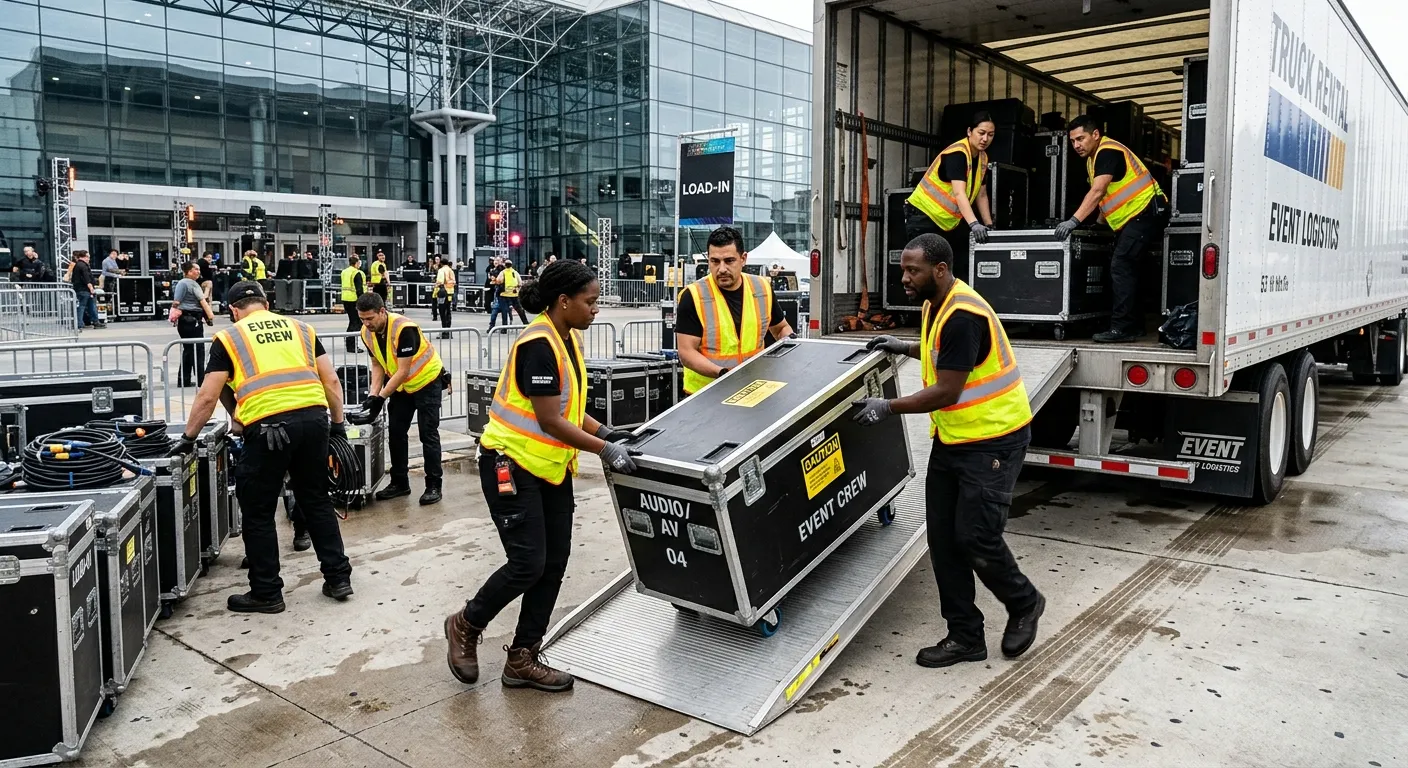
In the high-stakes worlds of event production, warehousing, and large-scale catering, the efficiency of your initial setup dictates the success of the entire operation. This is where a specialized Load In Crew becomes your most valuable asset. This comprehensive guide delves into everything you need to know about sourcing, managing, and leveraging these essential teams to streamline your logistics, reduce costs, and ensure a seamless start.
What is a Load In Crew? The Foundation of Success
A Load In Crew refers to a team of skilled laborers responsible for the physical transportation, unloading, and initial placement of equipment, materials, or goods at a venue or site. They are the first point of action, transforming an empty space into a functional one. Their work is physically demanding, time-sensitive, and requires meticulous coordination. Whether it's stage trussing for a concert, kitchen equipment for a large-scale catering event, or pallets in a distribution warehouse, the load in phase sets the tempo.
Load In Crews Across Key Industries
For festivals, conferences, and corporate events, the load in crew handles everything from staging and lighting rigs to audio equipment and decor. They work against tight deadlines, often during unsociable hours, and must navigate complex venue access points. Their precision directly impacts the safety and timely start of the event. Partnering with a staffing agency that understands these pressures, like those offering support for major seasonal attractions, is crucial.
Pro-Tip: The Hidden Cost of Amateur Crews
Hiring an inexperienced or understaffed load in crew can lead to equipment damage, overtime fees for other waiting staff (like your head chef), missed deadlines, and even worker injuries. The upfront savings are almost always outweighed by downstream costs and risks. Investing in a professional crew through a reputable agency is a strategic cost-saving measure.
Key Benefits of Hiring a Professional Load In Crew
Speed & Efficiency
Professional crews use proven techniques and teamwork to execute load-ins rapidly. They understand how to sequence tasks, utilize equipment optimally, and avoid bottlenecks. This gets your event operational faster or your warehouse receiving line moving, saving you valuable time and money.
Enhanced Safety & Compliance
A reputable crew is trained in manual handling, machinery operation (like forklifts), and site-specific safety protocols. They carry appropriate insurance and understand risk assessments. This minimizes the chance of accidents that can lead to injuries, damaged goods, and costly legal liabilities.
Scalability & Flexibility
Staffing needs fluctuate. A professional staffing agency allows you to scale your Load In Crew up or down based on the day's volume. Need 20 people for a massive festival load-in and only 4 for a weekly warehouse delivery? Flexible staffing, much like finding temp chef jobs for seasonal peaks, provides this agility without the burden of permanent hires.
Building and Managing Your Elite Load In Crew
Sourcing a crew is just the first step. Effective management is what turns a group of individuals into a high-performing unit. Here’s a deep dive into the process.
Step 1: Defining Your Requirements
Precision in planning prevents poor performance. Before you even begin to hire staff, you must outline:
- Scope & Scale: What exactly needs to be moved? List all items, weights, dimensions, and fragility.
- Timeline: What is the access window? Create a minute-by-minute schedule from truck arrival to completion.
- Skills Required: Does the job need forklift certification, experience with specific rigging, or knowledge of commercial kitchen equipment?
- Site Specifics: Are there loading dock height restrictions, stairs, narrow corridors, or special security clearances needed? For some high-security venues, you might even need personnel with specialist security clearance.
Step 2: Sourcing Talent – Agency vs. Direct Hire
This is a critical decision. Direct hiring offers more control but comes with immense administrative burden: recruitment, payroll, insurance, and HR management. For most businesses, especially those with fluctuating needs, partnering with a specialist staffing agency is the superior choice. Agencies like ours provide vetted, experienced Load In Crew professionals, handle all compliance and payroll, and offer replacement guarantees. They function as an extension of your HR and recruitment department, saving you time and mitigating risk.
This video breaks down the true financial implications of the hiring decision, a must-watch for any operations manager.
Step 3: On-Site Management & Communication
Once your crew arrives, clear communication is paramount. Designate a single point of contact from your team to brief the crew lead. Provide:
- A detailed site plan with unloading zones and storage areas marked.
- Clear priority lists (what needs to be placed first).
- Safety briefings specific to the site.
- Regular check-in points to monitor progress against the timeline.
Integrating Load In Crews with Other Temporary Staff
A Load In Crew rarely operates in a vacuum. Their efficiency directly impacts other temporary staff. For instance, a slow load in at a catering event delays the kitchen team, including those in temp chef jobs, and the front-of-house staff preparing for service. Coordinating through a single agency that provides multiple staffing solutions—from warehouse operatives to hospitality professionals—ensures a cohesive workflow and shared accountability.
Frequently Asked Questions (FAQ)
This depends on the scale and location of your project. For large, complex events (e.g., major exhibitions or concerts), booking 4-8 weeks in advance is advisable to secure the best crews. For standard warehouse receiving or smaller events, 1-2 weeks may suffice. However, for true emergencies or last-minute needs, many agencies—like those offering urgent short-term staffing—specialize in rapid deployment, sometimes within hours.
Core certifications include Manual Handling and Health & Safety (COSHH). For operating machinery, valid Forklift (RTITB/NPORS) licenses are essential. In construction environments, a CSCS card is mandatory. For events, PLASA Event Safety Passport or similar is valuable. A professional agency will verify and track these credentials for all workers, giving you peace of mind.
Absolutely. This is a major advantage. For example, you can hire a Load In Crew to set up a catering kitchen, and then a portion of that team or a separate team from the same agency can transition into roles like kitchen porters or catering assistants for the event duration. Similarly, warehouse staff who unload goods can be the same staff who manage inventory picking later. This seamless transition is a hallmark of integrated recruitment solutions.
Reputable agencies employ a rigorous vetting process: right-to-work checks, comprehensive reference validation, and skills assessments. Many also use performance monitoring systems where client feedback directly impacts a worker's future assignments. This creates a self-reinforcing cycle of quality. Look for agencies with proven track records in your specific sector, whether it's hospitality, logistics, or construction.
Ready to Optimize Your Operations with a Professional Load In Crew?
Stop letting logistical bottlenecks slow you down and increase your risk. Partner with a staffing specialist that understands the critical, time-sensitive nature of load-in work. Whether you need a crew for a one-off major event or ongoing support for your warehouse, we connect you with vetted, reliable, and skilled professionals.
Streamline your first mile. Ensure every project starts on solid ground.
Advanced Planning: The Load In Crew Run Sheet & Critical Path Analysis
Moving beyond basic scheduling, elite operations employ a Run Sheet and Critical Path Analysis (CPA) specifically for the load-in phase. This transforms a list of tasks into a dynamic, interdependent map of the entire operation.
Crafting the Ultimate Load In Run Sheet
A run sheet is the crew's bible. It should be a minute-by-minute, role-assigned document that includes:
- Pre-Arrival Call: Crew lead contacts site manager 30 mins before ETA to confirm access details.
- Stage 1 - Unloading & Sorting: Designated teams for fragile, heavy, and priority items. Forklift operator slots are timed to the minute.
- Stage 2 - Primary Movement: Pathways are cleared and manned. Communication protocol switches to handheld radios for teams moving through blind spots.
- Stage 3 - Placement & Preliminary Assembly: Items are not just dumped; they are oriented correctly for the next trade. For example, stage decks are laid out in sequence for the carpentry crew following behind.
- Buffer Zones: Mandatory 10-15 minute buffers are built in every 90 minutes for hydration, re-briefing, and unforeseen delays.
Applying Critical Path Analysis
CPA identifies the sequence of crucial, dependent tasks that determine the minimum project time. For a load in, the critical path might be: Forklift Unloading → Truss Ground Assembly → Hoist Point Access → Overhead Rigging. If any task on this path is delayed, the entire load-in is delayed. A professional crew lead constantly monitors this path, reallocating resources from non-critical tasks (like moving non-essential decor) to keep the critical path on schedule. This level of oversight is akin to the precision required for managing complex large-scale hospitality operations.
Case Study: The 4-Hour Festival Turnaround
Challenge: A major music festival had a 4-hour window between the end of one day's event and the scheduled load-in for the next day's headline act, which required a completely different stage configuration. Delays would cancel performances.
Solution: The staffing agency deployed two specialized, overlapping crews. Crew A (The Strippers): A focused team began demobilizing the outgoing act's gear the moment the last note played, using pre-planned pathways. Crew B (The Loaders): Waiting in a holding pattern, Crew B began loading in the new act's production the moment zones were cleared, guided by a luminated floor plan in the dark. CPA was used to prioritize the sound and lighting rigs over less critical backline equipment.
Outcome: The changeover was completed in 3 hours and 42 minutes. The client reported a 15% cost saving compared to the previous year's overtime-laden effort and has since contracted the agency for all event staffing needs.
Technology & The Modern Load In Crew
The image of a load in crew relying solely on clipboards and walkie-talkies is outdated. Today's top teams leverage technology for real-time coordination and accountability.
Digital Tools in Action
- Asset Scanning & Verification: Crew members use ruggedized tablets or smartphones to scan barcodes on incoming crates. This instantly updates the client's inventory system ("Item LC-45, 2kW Fresnel, received at Dock 2, 14:32") and eliminates manual manifest checking errors.
- Geofenced Time Tracking: Workers clock in and out via a mobile app only when within the geofenced venue boundary, ensuring accurate pay and proof of presence. This technology is equally transformative for managing remote HR and payroll functions.
- Live Photo Documentation: Crew leads snap timestamped photos at each phase – empty truck, fully loaded dock, final placement. This creates an immutable visual log for liability protection and client reporting.
The Communication Stack
Beyond basic radios, professional crews may use:
- Bone Conduction Headsets: Allow for clear communication in extremely loud environments (like next to generator trucks) while leaving ears open to ambient site sounds for safety.
- Dedicated Group Messaging Channels: Platforms like Slack or Teams are set up for a specific job, linking the crew lead, site manager, and agency coordinator for instant updates and file sharing (like updated floor plans).
Navigating Complex Venue & Access Challenges
A professional crew's value is most apparent in constrained or complex environments. Standard operating procedures often fail here.
Historic Venues & Limited Access
Loading a full concert production into a historic theatre with no loading dock and narrow, winding staircases requires ingenuity. Techniques include:
- External Climbing Systems: Using temporary, engineered external elevators or pulley systems to bypass interior obstacles.
- Disassembly & Reassembly Sequencing: Breaking down items into smaller components than usual (e.g., removing speaker drivers on-site) and having a dedicated team inside to rebuild. This requires crew members with specific technical knowledge, similar to the specialized skills needed for temp chef jobs in high-end kitchens.
- Floor Protection Logistics: Mapping a continuous, reinforced path of protective flooring through priceless hallways.
Urban Environments & Congestion
City center load-ins face parking suspensions, noise ordinances, and pedestrian management. A pro crew coordinates with:
- Local Authorities: To secure precise parking bay allocations for trucks at timed intervals.
- Traffic Management Companies: To implement safe pedestrian diversions and rolling roadblocks for crane operations.
- Resident Liaison: Proactively informing neighbors of unavoidable disruption schedules, a soft skill that reflects the customer service ethos of hospitality professionals.
Pre-Site Access Checklist for Complex Load-Ins
Use this list to brief your staffing agency and ensure no detail is missed:
- Has a site survey been conducted in the last 7 days?
- Are all crew names and IDs submitted for security clearance?
- Is there a designated, signed holding area for crew before access?
- Are power and lighting confirmed for the load-in zone?
- Have weight limits for floors and elevators been verified with venue plans?
- Is a dedicated waste/empty packaging removal plan in place?
The Financial Calculus: ROI of a Professional Load In Crew
While the hourly rate for a professional crew may seem higher than ad-hoc labor, the true Return on Investment (ROI) is calculated across multiple dimensions:
| Cost Factor | Amateur/In-House Crew | Professional Agency Crew | ROI Impact |
|---|---|---|---|
| Direct Labor Cost | Lower hourly rate | Higher hourly rate | Negative (apparent) |
| Time Overrun | High probability | Minimal (contractual deadlines) | Positive (Saves overtime for other staff) |
| Equipment Damage | Client bears full cost | Agency insurance covers | Positive (Risk transfer) |
| Management Overhead | High (HR, payroll, scheduling) | Near zero for client | Positive (Focus on core business) |
The cumulative effect almost always results in a lower total cost of ownership for the project when using professionals. This financial logic mirrors the decision to outsource other specialized functions, such as utilizing temp chef jobs for peak culinary demand rather than maintaining an oversized permanent team.

