Strategic Food Production Staffing: Your Blueprint for a Resilient & Agile Workforce
Navigating the volatile demands of food manufacturing and processing requires more than just filling shifts; it demands a strategic partnership with expert staffing solutions. Discover how to build a flexible, skilled, and compliant team that drives productivity and quality.
Hire Food Production Staff TodayNavigating the Food Production Staffing Landscape
Select the staffing model that aligns with your operational goals and challenges.
Temporary & Contract Staffing
Ideal for managing production spikes, covering unexpected absences, or fulfilling short-term contracts. A catering staff agency specializing in food production can provide vetted, trained workers within hours, ensuring your line never stops. This model offers ultimate flexibility without the long-term commitment, perfect for businesses facing fluctuating order books or launching new product lines.
Pro-Tip:
For last-minute needs, leverage an agency's deep talent pool. A service like our urgent short-term catering jobs portal demonstrates the speed at which qualified staff can be mobilized, a principle that applies directly to food factory floors.
Permanent Recruitment Solutions
Building your core team requires a strategic approach to find candidates who align with your company culture and possess the technical skills for long-term success. Specialized agencies conduct thorough screening, skills assessments, and cultural fit evaluations. This is crucial for roles like Production Supervisors, Quality Assurance Managers, and Maintenance Engineers where stability and expertise are paramount.
The Temp-to-Perm Pathway
This hybrid model offers a"try before you buy" advantage. It allows you to evaluate a worker's performance, attitude, and team fit over a contracted period before offering a permanent position. It significantly reduces the risk and cost of a bad hire. Many workers, as explored in resources like our guide on temporary agency work, value this pathway as a route to stable employment.
On-Demand & Seasonal Staffing
The food industry is inherently seasonal, from summer BBQ sauce surges to winter holiday confectionery peaks. An effective Food Production Staffing partner maintains a ready pool of workers trained in GMP (Good Manufacturing Practices) and food safety to deploy at a moment's notice. This mirrors the approach needed for large-scale event catering staff deployments, where scale and timing are critical.
Core Benefits of Partnering with a Specialized Food Production Staffing Agency
Rapid Scalability & Flexibility
Respond instantly to changes in production volume, urgent orders, or unexpected staff shortages. A reliable Temp Agency Catering and food production partner functions as an extension of your HR department, removing the administrative burden of rapid hiring. This agility is essential, much like securing warehouse jobs staff for a sudden logistics spike.
Guanteed Compliance & Safety
Food production is governed by strict regulations (HACCP, BRC, FDA). A specialist agency ensures all temporary staff possess current food hygiene certifications, allergen awareness training, and understand critical safety protocols. They manage right-to-work checks, payroll, and insurance, mitigating your legal and financial risk.
Access to Pre-Vetted Talent Pools
Skip the time-consuming sifting of unqualified applicants. Agencies maintain databases of workers with specific skills—from packaging machine operators and butchers to quality control technicians. This targeted approach is similar to how a kitchen staff recruitment agency in London sources specialized chefs for high-end venues.
Reduced Overhead & Hidden Costs
Eliminate costs associated with advertising, background screening, onboarding, and employee benefits for temporary roles. The agency model converts fixed labour costs into variable ones, providing significant financial predictability and protecting your bottom line during quieter periods.
Focus on Core Operations
Free up your management and HR teams to focus on strategic goals like process improvement, quality assurance, and business development, rather than being consumed by endless recruitment cycles. Outsourcing staffing logistics is a powerful recruitment solution for growth-focused companies.
Mitigation of Skill Shortages
The food manufacturing sector faces a skills gap. Specialist agencies actively recruit and train candidates to meet industry demands, giving you access to a pipeline of talent that may not be actively searching job boards. This proactive sourcing is key in a competitive market.
Implementing a Successful Food Production Staffing Strategy
Moving from reactive hiring to a proactive staffing plan requires careful planning and clear communication with your agency partner.
Step 1: Comprehensive Needs Analysis
Begin by conducting an internal audit. Map out your production calendar, identifying predictable peaks (e.g., seasonal product launches, holiday periods) and potential valleys. Quantify the number of workers needed per skill set (e.g., line operatives, forklift drivers, sanitation crew). Define the specific technical competencies and certifications required for each role. Clearly outline your site's safety protocols and company culture to ensure a good fit. This level of detail enables your staffing partner to tailor their search precisely, much like the specificity required for counter terrorist cleared roles in high-security environments.
Step162: Selecting the Right Staffing Partner
Not all agencies are created equal. Seek a partner with a proven track record in food manufacturing, not just general industrial staffing. Evaluate their vetting processes: Do they conduct in-person interviews? Verify certifications? Provide site-specific inductions? Assess their responsiveness and communication style. A partner who understands the urgency of a downed production line is invaluable. Review case studies or testimonials relevant to your scale and sector.
Critical Question:
"Can you provide a detailed breakdown of your candidate screening process for food safety and GMP compliance?" A trustworthy agency will have a transparent, rigorous system in place.
Step 3: Seamless Onboarding & Integration
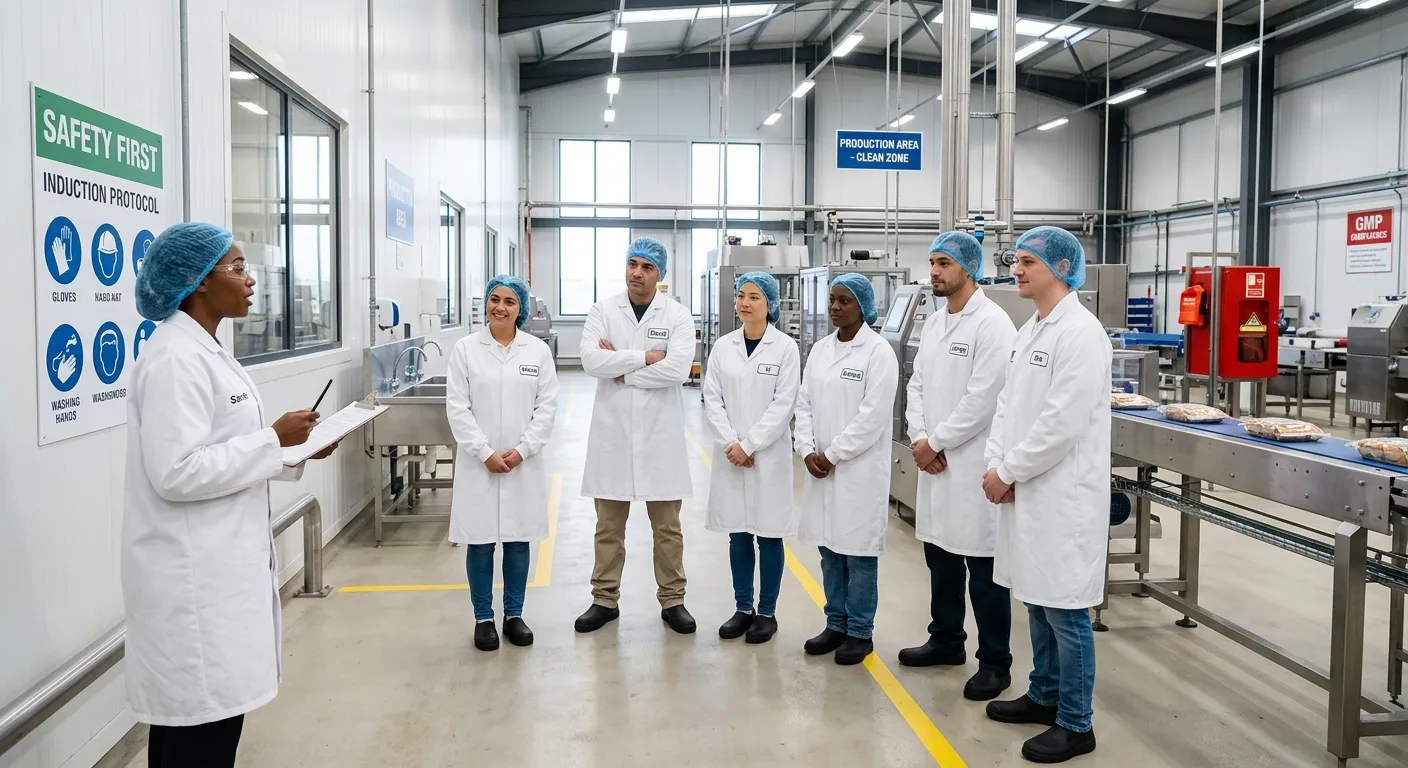
The first day for a temp worker sets the tone. Coordinate with your agency to ensure all pre-employment checks are complete before arrival. Prepare a concise, effective site induction that covers emergency procedures, key contacts, quality standards, and performance expectations. Assign a buddy or supervisor from your permanent team to provide guidance and support. This integration is as crucial as it is for permanent hires in roles like Catering General Manager jobs, where understanding the operational ecosystem is key to success.
Step 4: Performance Management & Feedback Loops
Establish clear Key Performance Indicators (KPIs) for temporary staff, such as attendance, adherence to safety protocols, output quality, and teamwork. Provide regular, constructive feedback directly to the worker and share summarized performance reports with the agency account manager. This collaborative approach allows the agency to coach their candidates and continuously improve the quality of staff supplied. It transforms a transactional relationship into a strategic partnership focused on your operational excellence.
Overcoming Common Food Production Staffing Challenges
Specialist food production agencies are built for speed. For critical roles, many can provide pre-vetted candidates within 24-48 hours. This requires a strong existing talent pool and efficient logistics, similar to the model used for urgent van driver jobs. The key is maintaining clear, open communication with your agency contact, providing them with detailed role requirements from the outset to avoid delays.
Perception of lower quality is a common myth dispelled by professional agencies. Reputable partners invest heavily in screening, interviewing, and reference checking. They often provide basic training in food safety and machinery operation. Furthermore, because temp workers seek consistent assignments, their performance directly impacts their future opportunities, incentivizing reliability and a strong work ethic. Look for agencies that offer performance guarantees or replacement policies.
This is a two-part process. First, communicate your culture and non-negotiable safety standards clearly to your agency. The best agencies will screen for attitude, teamwork, and safety consciousness. Second, your onsite induction is critical. Don't treat temps differently. Include them in team briefings, emphasize the"why" behind safety rules, and encourage permanent staff to welcome them. This inclusive approach fosters buy-in and ensures everyone works to the same high standards.
When evaluating cost, consider the total cost of ownership. Direct hiring involves advertising fees, HR personnel time, interview hours, onboarding costs, benefits, and the significant risk of a mis-hire. An agency fee encompasses all of that recruitment overhead, plus compliance management. For fluctuating needs, the agency model is almost always more cost-effective. It provides budgetary certainty and allows you to scale labour in direct relation to revenue, protecting margins during slow periods.
Absolutely. Many agencies offering Food Production Staffing have dedicated divisions for executive and technical permanent placement. They leverage industry networks and headhunting techniques to access passive candidates—those not actively job searching but open to the right opportunity. This service is distinct from temp staffing and involves a deeper consultative partnership, similar to the approach used for specialized recruitment outsourcing in Leeds across various sectors.
Ready to Optimize Your Food Production Workforce?
Stop letting staffing shortages limit your production capacity, compromise your quality, or delay your orders. Partner with experts who understand the unique pressures and regulations of the food manufacturing industry.
Whether you need a team for a seasonal surge, reliable cover for absentees, or a strategic partner for your permanent hiring, the solution is one click away. Transform your staffing from a constant challenge into a competitive advantage.
Explore more insights on our expert blogs or browse our latest recent job listings across the food, catering, and hospitality sectors.
Case Study: Scaling for a Seasonal Surge in Bakery Production
A mid-sized artisan bakery supplying major UK retailers faced a critical challenge: their annual Christmas pudding and mince pie orders demanded a 200% increase in packaging and dispatch staff for an 8-week period. Their internal HR team lacked the bandwidth and network to source 45 qualified temporary workers swiftly.
By partnering with a specialized Food Production Staffing agency, they implemented a phased plan:
- Phase 1 (8 Weeks Out): The agency conducted a site visit, understood the specific machinery (flow-wrappers, labelling systems), and mapped the hygiene and safety protocols. They began pre-screening candidates from their pool with relevant experience.
- Phase 2 (4 Weeks Out): A dedicated cohort of 25 workers completed a mandatory half-day induction at the agency's training centre, covering allergen handling, dress code, and basic GMP.
- Phase 3 (Start Date): All 45 workers arrived site-ready. The agency's on-site coordinator managed daily sign-in, addressed any immediate issues, and provided a single point of contact for the bakery's production manager.
The Result: The production line ran at full capacity from day one, with zero delays. The agency handled all payroll, absenteeism cover, and performance management, allowing the bakery's management to focus solely on quality control and meeting tight retail deadlines. The success of this model led to an ongoing partnership for all seasonal peaks.
Key Takeaways
- Advanced Planning is Non-Negotiable: For large-scale seasonal hires, engage your agency partner at least 8-10 weeks in advance to ensure adequate candidate sourcing and training.
- On-Site Coordination Adds Value: For deployments of 20+ staff, an agency coordinator on-site resolves issues in real-time, boosting efficiency and reducing management burden.
- Training Standardization Works: Pre-induction by the agency ensures a consistent baseline of knowledge for all temps, leading to smoother site integration.
The Role of Technology in Modern Food Production Staffing
Leading agencies are leveraging technology to enhance speed, transparency, and quality in staffing solutions. Understanding these tools can help you choose a forward-thinking partner.
Digital Booking & Management Portals
Gone are the days of frantic phone calls and email chains. Sophisticated client portals allow you to log staffing requests 24/7, specifying role, skills, start time, and duration. You can track the status of your request in real-time, view profiles of assigned candidates, and digitally sign timesheets. This creates an audit trail and empowers your team with self-service efficiency, much like managing other digital supply chain components.
Skills Verification & Digital Credentialing
To combat certificate fraud and ensure compliance, progressive agencies use verified digital badges for key certifications like Food Safety Level 2, HACCP, or Forklift Truck licenses. These tamper-proof credentials are linked to the individual worker's profile and can be instantly verified by the client. This system provides greater assurance than paper certificates and streamlines the pre-shift verification process, a critical factor in high-compliance environments.
The Future: Data-Driven Workforce Planning
The next frontier is predictive analytics. By integrating with your production planning systems (with appropriate data privacy safeguards), a strategic staffing partner can analyze historical order data, forecasted demand, and even weather patterns that affect supply chains. They can then proactively suggest staffing levels weeks in advance, moving from a reactive service to a true strategic advisory role. This transforms staffing from a cost centre into a driver of operational resilience and capacity optimization.
Beyond the Factory Floor: Supporting Roles in Food Production
A robust food production operation relies on more than line staff. A full-service Food Production Staffing agency understands the ecosystem and can supply talent across the entire supply chain.
Logistics & Warehouse
From forklift drivers (with reach truck or counterbalance licenses) for raw material intake and finished goods dispatch, to pickers and packers for order fulfilment. These roles require an understanding of cold chain logistics and stock rotation (FIFO) principles.
Hygiene & Sanitation
Specialized deep-clean teams for factory shutdowns, equipped with knowledge of chemical safety (COSHH) and high-pressure cleaning systems. These are critical for maintaining BRC/SQF audit standards and preventing allergen cross-contamination.
Quality Assurance & Laboratory
Temporary or contract microbiologists, lab technicians, and quality inspectors for supporting peak testing loads, new product development trials, or covering maternity leave within a permanent QA team.
Engineering & Maintenance
Multi-skilled engineers, refrigeration specialists, and preventative maintenance technicians to cover planned shutdowns, emergency breakdowns, or installation projects for new production lines, ensuring minimal operational downtime.
By addressing staffing needs holistically, you ensure every link in your production chain is strong, resilient, and capable of meeting the demands of a dynamic market.

