Navigating Food Production Employment: Your Guide to Hiring Talent & Building a Resilient Workforce
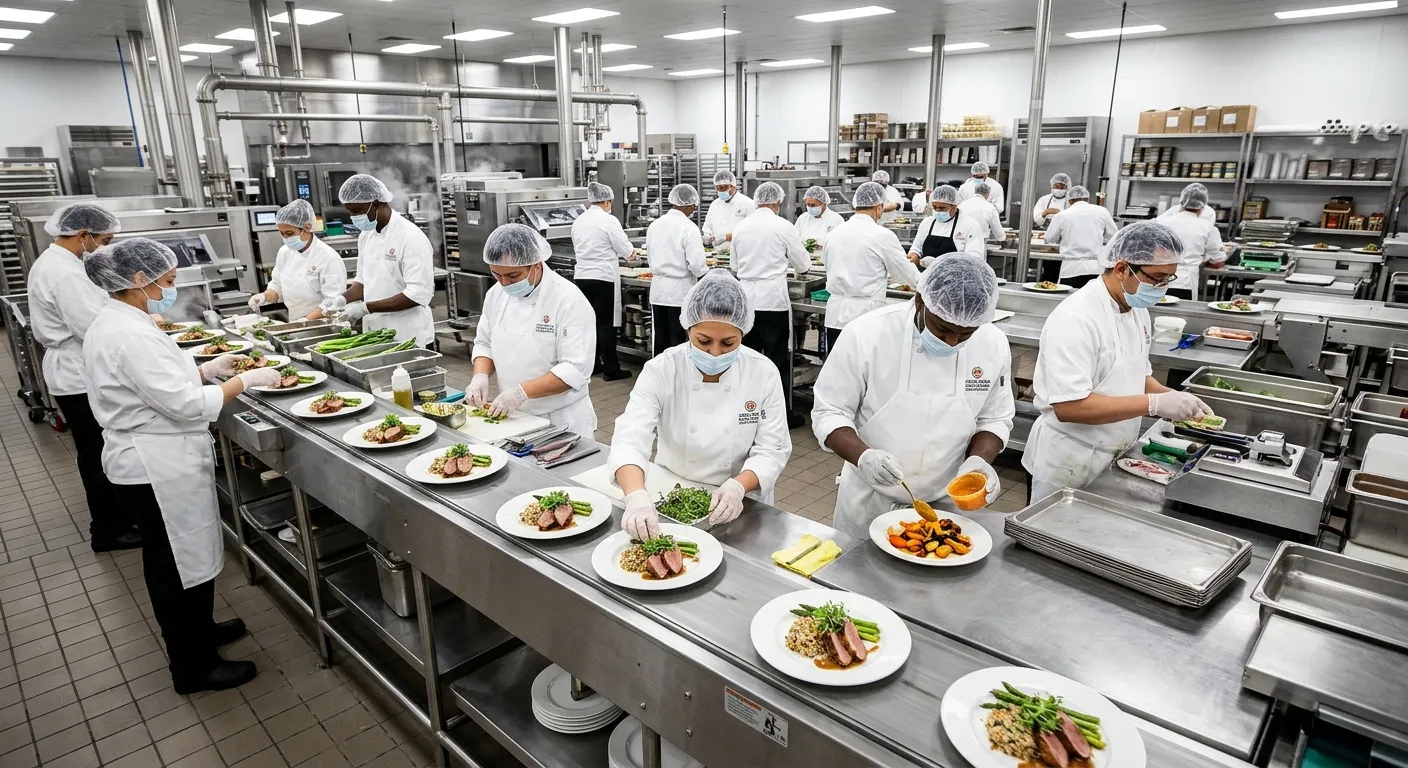
In the fast-paced, ever-evolving world of food production, securing the right employment talent is not just an operational task—it's a critical business strategy. From high-volume manufacturing to artisanal craft kitchens, the success of your enterprise hinges on a skilled, reliable, and adaptable workforce. This comprehensive guide delves into the intricacies of Food Production Employment, offering actionable insights for employers to hire effectively, manage talent, and future-proof their operations in a competitive market.
The Food Production Employment Landscape: A Multi-Category Overview
The sector is vast and varied. Understanding the distinct roles is the first step to strategic hiring. Explore the key categories below.
High-Volume Food Manufacturing Roles
This domain requires precision, speed, and strict adherence to health and safety protocols. Key positions include Production Line Supervisors, Quality Assurance Technicians, Machine Operators specializing in packaging (fillers, sealers, labelers), and Sanitation Specialists. The demand is often for shift workers, including nights and weekends, to maximize plant uptime. For businesses needing to scale their operational team quickly, understanding how to manage warehouse jobs and production logistics in tandem is crucial.
Pro Tip:
Implement a"temp-to-perm" model for manufacturing roles. This allows you to evaluate a worker's speed, accuracy, and team fit before making a permanent commitment, significantly reducing hiring risk. Learn more about this strategy in our resource, Guide to Temporary Agency Work in Catering & Hospitality.
Artisanal & Craft Food Production
This sector values creativity, culinary skill, and niche expertise. Roles range from Chocolatiers and Bakers to Specialty Cheesemakers and Preserves Chefs. Hiring here focuses on proven portfolios, specific technical skills (e.g., tempering chocolate, sourdough fermentation), and a passion for the craft. For establishments in major culinary hubs, partnering with a specialized Kitchen Staff Recruitment Agency in London or a dedicated Chef Hiring Agency Delhi can provide access to this curated talent pool that generic job boards often miss.
The Critical Backbone: Logistics & Warehousing
No food production operation succeeds without robust logistics. This includes cold chain specialists, forklift operators certified for food-grade environments, pickers and packers who understand FIFO (First-In, First-Out) inventory management, and HGV drivers with appropriate licenses for perishable goods. Seasonal spikes, like those around holidays, can create urgent short-term catering jobs demand that extends into logistics. Proactive planning for these peaks is essential.
Leadership, Compliance & Technical Expertise
Overseeing food production requires specialized leadership. This category includes Food Safety & HACCP Managers, Production Planners, Supply Chain Coordinators, and R&D Chefs. These roles demand a blend of industry-specific knowledge and general management skill. For senior positions like Catering General Manager Jobs, the search often requires a nuanced approach, balancing operational acumen with financial and people leadership.
Key Benefits of Strategic Food Production Staffing
Investing in a deliberate hiring strategy delivers tangible returns across your business. Here are the core benefits of getting Food Production Employment right.
Ensured Compliance & Safety
Skilled professionals are trained in critical regulations like HACCP, allergen control, and BRCGS standards. Proper staffing mitigates the risk of costly contamination incidents, recalls, and legal penalties, protecting both your product and your brand reputation.
Operational Scalability & Flexibility
Access to a reliable talent pool allows you to scale your team up or down in response to order volumes, seasonal demand, or new contract wins. This agility is a key competitive advantage, preventing lost revenue from understaffing or wasted resources from overstaffing.
Enhanced Product Quality & Innovation
Talented chefs, food technologists, and QA staff directly influence the consistency, taste, and innovation of your product line. Investing in top-tier Food Production Employment fuels new product development and ensures your offerings stand out in a crowded marketplace.
Deep Dive: Actionable Strategies for Effective Hiring
Leveraging Technology in Recruitment
The future of hiring is digital. AI-powered tools are revolutionizing Food Production Employment by screening CVs for specific technical skills, scheduling interviews efficiently, and even conducting initial candidate screenings via chatbot or phone. This frees your HR team to focus on high-value interactions.
Video interviewing platforms are particularly useful for assessing candidates for remote or multi-site roles. Furthermore, specialized software can verify food safety certifications and track license renewals automatically. For a comprehensive look at this trend, explore our analysis: Recruitment Outsourcing in Leeds, which often incorporates these advanced tech solutions.
Checklist: Must-Have Qualities for Food Production Candidates
- • Provable experience with GMP (Good Manufacturing Practice) and HACCP principles.
- • Physical stamina and ability to work in temperature-controlled environments.
- • Meticulous attention to detail and a commitment to hygiene.
- • Teamwork and communication skills for fast-paced line work.
- • Adaptability and willingness to work flexible or rotating shifts.
- • For specialized roles: Specific technical certifications (e.g., forklift license, pastry diploma).
The Partner Advantage: Specialized Recruitment Agencies
Navigating Food Production Employment alone can drain internal resources. Partnering with a sector-specialist agency provides immense value:
Access to Pre-Vetted Talent Networks
Agencies like a premier Chef Hiring Agency Delhi or a dedicated Catering Staff Agency maintain deep benches of candidates who are already interviewed, reference-checked, and often hold necessary clearances. This is invaluable for filling urgent van driver jobs or finding a last-minute Head Chef.
Market Intelligence & Salary Benchmarking
They provide crucial insights into current wage rates, in-demand skills, and competitor hiring activity, ensuring your offers are competitive whether you're hiring for Premier Hospitality Jobs in Wolverhampton or a technical production role.
Expert Insight:
"The most successful food producers view recruitment as a strategic partnership, not a transactional service. The right agency becomes an extension of your HR team, understanding your culture and quality standards to deliver candidates who thrive from day one." – Industry Recruitment Director.
Navigating Seasonal & Project-Based Demand
Food production is inherently cyclical. Holiday seasons, major sporting events, and summer festivals create massive spikes in demand for specific products and, consequently, staff. Successful businesses plan for these peaks months in advance.
Establish relationships with Temporary Catering Staff Agencies and build a pool of reliable seasonal workers you can re-engage each year. Consider cross-training permanent staff in multiple roles to create internal flexibility. For large-scale, time-sensitive projects, such as staffing a Winter Wonderland food village, a fully managed staffing solution is often the most efficient path to ensure you have the right number of skilled hands on deck from day one.
Frequently Asked Questions (FAQ)
Quick answers to common questions about Food Production Employment and hiring.
Current high-demand roles include Food Safety & Quality Assurance Managers, experienced Production Line Supervisors, skilled Butchers and Fishmongers for premium lines, and Multi-skilled Engineering Maintenance Technicians for automated plants. There is also consistent demand for reliable Event Catering Staff for large-scale functions, which overlaps with production for bulk meal preparation.
Beyond competitive pay, focus on creating a positive work culture. Offer clear career progression pathways, invest in continuous training (e.g., funding food safety certifications), provide modern and safe working facilities, and consider benefits like flexible scheduling where operationally possible. Highlighting your company's commitment to sustainability or innovation can also attract purpose-driven candidates. For retention, regular feedback and recognition are key.
General job boards cast a wide net but require significant internal time to sift through unqualified applicants. A specialist agency for Food Production Employment acts as a strategic filter. They understand the specific technical jargon, mandatory certifications, and soft skills needed for success in your niche. They pre-screen for both competency and cultural fit, presenting only the most relevant candidates, which dramatically accelerates the hiring process and improves hire quality.
This is where a trusted agency partnership proves its worth. Established agencies with large, active talent pools can often provide same-day or next-day cover for critical roles. Having a pre-agreed contingency plan with a provider like a Temporary Catering Staff Agency is the best defense against operational disruption. Internally, cross-training staff provides resilience, and maintaining a small list of reliable former temporary workers you can call directly can be a useful stopgap.
Ready to Build Your Ideal Food Production Team?
Stop letting staffing challenges slow down your production, compromise your quality, or limit your growth. Whether you need a full team for a new production line, a specialist Chef Hiring Agency Delhi connection, or urgent cover for unexpected demand, the solution is just one click away.
Connect with our specialist consultants and transform your Food Production Employment strategy.
Case Study: Scaling a Specialty Bakery for National Retail
Theory meets practice in the following example, illustrating the tangible impact of strategic Food Production Employment planning.
The Challenge
A renowned artisanal bakery, famous for its sourdough and gluten-free lines, secured a contract to supply 500 supermarkets nationwide. Their existing team of 15 craft bakers was insufficient. They needed to scale production fivefold within six months while maintaining impeccable quality and consistency—a near-impossible task without a specialized workforce strategy.
The Strategic Solution
The bakery partnered with a specialist food production recruitment agency. The strategy was threefold:
- Core Team Leadership: The agency sourced a seasoned Production Manager with experience in scaling craft operations, who became the internal project lead.
- Blended Workforce Model: A core of 20 permanent, highly-skilled bakers was hired for recipe integrity and training. They were supplemented by 30 temporary production assistants, hired through the agency's pool, trained on specific, repetitive tasks to boost output.
- Technical Expertise Injection: A dedicated Food Technologist was placed to formalize HACCP plans and ensure BRCGS accreditation for the new facility, a non-negotiable for the retail contract.
The Results
- ✓ 90-Day Ramp-Up: Full production capacity achieved in 3 months, 50% ahead of schedule.
- ✓ Quality Consistency: First audit score of 98%, with zero product recalls in the first year.
- ✓ Cost Efficiency: 15% lower overall staffing cost versus attempting a purely permanent hire model, due to optimized flexibility.
"The agency didn't just fill roles; they understood we were scaling a craft. They found people who respected the art but could thrive in a new, systematic environment. It was the difference between winning and losing that contract." – Founder, Specialty Bakery.
Future-Proofing Your Workforce: Emerging Trends & Skills
The food production landscape is not static. Proactive employers are already adapting their hiring criteria to build a resilient, future-ready team. Here are the key trends shaping Food Production Employment.
Automation & Human-Machine Collaboration
Robotic palletizers, AI-powered vision systems for quality inspection, and automated packaging lines are becoming standard. This doesn't eliminate jobs but transforms them. The demand is shifting from manual line workers to Automation Technicians, Mechatronics Apprentices, and Line Supervisors with digital literacy. Hiring for adaptability and a willingness to learn new tech is as important as hiring for current manual skills. Upskilling existing staff in basic robotics maintenance is a powerful retention tool.
Consider how roles like warehouse jobs are evolving with automated retrieval systems, requiring new skill sets.
Sustainability & Circular Economy Expertise
Consumers and regulators demand sustainable practices. This creates new specialized roles: Waste Reduction Managers, Sustainable Packaging Specialists, and Upcycling Chefs who can create new product lines from by-products. Candidates who demonstrate knowledge of lifecycle analysis (LCA), carbon footprint measurement, and ethical sourcing are increasingly valuable. This trend also influences traditional roles; a Head Chef in a production kitchen may now need to specify plant-based formulations and low-waste processes.
The Data-Driven Production Floor
IoT sensors, real-time yield monitoring, and predictive analytics are moving from corporate IT to the factory floor. This means:
1. Data-Aware Operators
Line staff need to interpret dashboards and input data accurately, making basic digital competence a mandatory skill.
2. The Rise of the"Technician- Analyst"
Hybrid roles like Process Improvement Technicians who can both fix a machine and analyze its performance data to prevent downtime are gold dust.
3. Recruitment Evolution
Job descriptions now include terms like"comfortable with SCADA systems" or"experience with MES software." Specialist agencies are crucial to finding this niche talent.
Navigating Regulatory Compliance in Hiring
Food production is one of the most heavily regulated industries. Your hiring process itself must be compliant, and you must verify the compliance of every candidate. A misstep here carries severe legal and financial risk.
| Role Type | Essential Certifications & Checks | Verification Tip |
|---|---|---|
| All Production Staff |
|
Use a digital onboarding portal that requires candidates to upload certificate copies and uses government APIs for right-to-work checks. |
| Management & Technical |
|
Contact the issuing body (e.g., CIEH, RSPH) to verify high-level certificates. For technical roles, assess practical knowledge through case-study interviews. |
| Logistics & Drivers |
|
For urgent driver jobs, agencies should provide pre-verified license and CPC checks as part of their service. |
Warning: The Cost of Non-Compliance
Hiring an uncertified individual into a safety-critical role can lead to:
Product Recall: Average cost exceeding £100k, excluding brand damage.
Regulatory Fines: FSA and local authority penalties for hygiene breaches.
Civil Liability: If a consumer is made ill by a product handled by untrained staff.
A rigorous, documented hiring and verification process is your primary defense.
Building a Talent Pipeline, Not Just Filling a Role
The most resilient food producers think beyond the immediate vacancy. They engage in proactive talent pipelining. This involves:
- • Apprenticeship Programs: Partnering with local colleges to develop butchers, bakers, and food technologists tailored to your methods.
- • Alumni Networks: Maintaining positive relationships with high-performing seasonal or temporary workers, creating a"first-call" list for future needs.
- • Industry Engagement: Sponsoring awards, attending specialist career fairs, and having a visible presence on platforms where food science and production professionals congregate.
- • Internal Mobility Pathways: Clearly mapping how a Line Packer can train to become a QA Technician, investing in internal promotion.
This long-term view turns Food Production Employment from a recurrent cost center into a strategic asset, ensuring you have access to the right talent—not just for today's crisis, but for tomorrow's opportunity.

