Food Production Staff Adalah: The Definitive Guide to Hiring & Workforce Management
Unlock the full potential of your food manufacturing and catering operations. This comprehensive guide explores what Food Production Staff Adalah, its critical roles, and how to build a reliable, skilled team in today's competitive market.
Hire Expert Food Production Staff TodayWhat is Food Production Staff? A Core Workforce Explained
The term "Food Production Staff Adalah" refers to the essential personnel responsible for the entire lifecycle of food creation within manufacturing plants, commercial kitchens, and catering facilities. This workforce is the backbone of the food industry, ensuring that products are safe, consistent, and meet stringent quality standards before reaching consumers or clients. In essence, they are the operational engine transforming raw ingredients into finished goods.
Understanding the composition and needs of this staff is paramount for any business leader. Whether you're running a high-volume contract catering service, a boutique food brand, or a large-scale manufacturing plant, the efficiency and skill of your production team directly impact your bottom line, reputation, and compliance with agencies like the Food Standards Agency (FSA).
Pro-Tip: The Skill Spectrum
Food production roles exist on a wide spectrum. At one end are entry-level positions like prep assistants and packers, crucial for throughput. At the other are highly skilled technicians, butchers, and bakers who require years of training. A successful operation needs a balanced mix of both, often managed through strategic partnerships with a specialized Catering Staff Agency to fill gaps efficiently.
Strategic Hiring for Food Production Teams
Recruiting for food production presents unique challenges: seasonal demand spikes, stringent hygiene certifications, and the need for shift flexibility. A reactive hiring process leads to costly downtime. The modern solution involves a blend of permanent core staff and flexible temporary workers to scale your team up or down as needed.
For specialized roles, particularly in metropolitan hubs, partnering with a premier Chef Recruitment Agency London can provide access to a curated pool of talent that understands the pace and standards of city establishments. This is especially valuable for roles requiring niche skills in patisserie, artisan butchery, or large-batch sauce production.
Many businesses find success with a temp-to-perm model, allowing them to evaluate a worker's skills, attitude, and cultural fit before making a permanent offer. This significantly reduces hiring risk and turnover costs. For immediate needs, such as covering a sudden staff shortage or a large incoming order, exploring Urgent Short Term Catering Jobs listings through a reputable agency can be a lifeline.
Optimizing Management & Retention
Managing food production staff goes beyond scheduling. It involves creating an environment that prioritizes safety, quality, and morale. Clear communication of Standard Operating Procedures (SOPs), consistent training on Hazard Analysis and Critical Control Points (HACCP), and investing in ergonomic workspaces are non-negotiable.
Retention is a critical issue. High turnover disrupts consistency and increases training overhead. Key retention strategies include offering clear career progression paths (e.g., from line operative to shift supervisor), competitive pay that reflects unsocial hours, and recognizing good performance. Integrating temporary staff seamlessly is also crucial; treat them as part of the team to ensure they are motivated and productive, which is a core principle of effective Hotel Staffing Solutions and applicable to production environments.
Agency & Outsourcing Solutions
For many businesses, managing the entire recruitment lifecycle for food production staff is a significant drain on internal HR resources. This is where specialist agencies provide immense value. A dedicated Kitchen Staff Recruitment Agency in London or a national food production staffing partner handles advertising, screening, credential verification (like food hygiene certificates), and payroll for temporary staff.
The benefits are clear: speed (filling roles in days, not weeks), compliance (ensuring right-to-work and safety training), and flexibility. This model is not just for emergencies; it's a strategic tool for managing predictable peaks, such as holiday seasons or large contract wins, similar to how events rely on Event Catering Staff. For a deeper dive into building a flexible workforce, our Guide to Temporary Agency Work is an essential resource.
Core Roles & Strategic Benefits of Expert Food Production Staff
Building a competent team delivers tangible advantages across your entire operation. Here are the key positions and the value they bring.
Production Operatives & Line Workers
The foundation of throughput. They handle machinery, assembly, packing, and basic preparation. Efficiency here directly determines output capacity and unit cost.
- ✓ High-volume output management
- ✓ Machinery operation & basic maintenance
- ✓ Adherence to line speed & safety protocols
Skilled Food Technicians & Chefs
These are the quality guardians. Butchers, bakers, pastry chefs, and sauce makers whose craft defines your product's taste, texture, and consistency. Partnering with a Chef Recruitment Agency London is key for sourcing this top-tier talent.
- ✓ Recipe consistency & product development
- ✓ Quality control & sensory evaluation
- ✓ Supervision of preparation teams
Hygiene & Safety Supervisors
Critical for compliance and brand protection. They enforce HACCP, manage cleaning schedules, conduct audits, and ensure the production environment meets all legal and safety standards, preventing costly recalls or shutdowns.
- ✓ HACCP documentation & compliance
- ✓ Deep-clean management & pest control
- ✓ Staff hygiene training & monitoring
Navigating Challenges in Food Production Staffing
The landscape for hiring and retaining Food Production Staff Adalah is fraught with industry-specific hurdles. Seasonal volatility means needing 50% more staff for the Christmas period, while summer might see a dip. The physical nature of the work can lead to higher absenteeism, and competition from logistics and Warehouse Jobs can drain the pool of reliable labour.
Furthermore, Brexit and changing immigration policies have tightened the labour market, making it harder to find EU nationals who once filled many of these roles. This has increased the wage pressure and made retention strategies even more critical. Businesses must now look beyond traditional recruitment, considering apprenticeship schemes, partnerships with local colleges, and robust agency relationships to build a resilient pipeline.
The Compliance Imperative
Every member of your food production staff must hold a valid Level 2 Food Safety and Hygiene certificate as a minimum. For supervisors, Level 3 is often required. Agencies shoulder the burden of verifying these credentials, along with right-to-work checks, for every temporary worker they supply. This mitigates your legal risk and ensures audit readiness, a service that extends to specialized sectors requiring Counter Terrorist Cleared personnel for high-security venues.
Cost-Benefit Analysis: In-House vs. Agency Staffing
-
Reduced Time-to-Hire
Agencies can fill roles in 24-72 hours vs. weeks for direct recruitment, minimizing production delays.
-
Lower Administrative Burden
The agency handles payroll, taxes, sick pay, and holiday pay for temps, freeing your HR team for strategic tasks.
-
Access to a Wider Talent Pool
Agencies have networks of pre-vetted candidates, including those open to temp or temp-to-perm roles, who aren't actively job searching.
Frequently Asked Questions on Food Production Staff
In practical, operational terms, it refers to the collective team responsible for the hands-on creation and processing of food items. This encompasses everyone from the individual weighing ingredients and operating the mixer, to the person cooking the batch, the technician monitoring pasteurization temperatures, the team packaging the final product, and the hygiene crew cleaning the line. It's a functional definition of the direct labour force in a food setting, distinct from management, sales, or logistics roles. For businesses, managing this cohort effectively often involves leveraging Temporary Catering Staff Agency support for flexibility.
Speed and reliability are the core benefits of using a specialized staffing agency. The most effective method is to contact a reputable agency that specializes in food, catering, and production roles. They maintain a database of vetted, available workers with verified certifications. By clearly communicating your needs—start date, duration, specific skills (e.g., bakery experience, forklift license for warehouse adjacent roles), and shift patterns—they can often place suitable staff within 24-48 hours. This model is identical to securing Urgent Van Driver Jobs or event staff; it's about tapping into an existing, active talent pool.
While both work in food, the roles differ significantly in scope, creativity, and responsibility. General production staff are typically task-oriented, following strict SOPs for repetitive processes like assembly, packing, or basic vegetable prep. A chef (including sous chefs, specialist bakers, butchers) is a craftsperson and often a manager. They are responsible for recipe creation, flavour profiling, managing a section or kitchen, costing dishes, and training junior staff. Their work requires greater judgement and adaptability. For this reason, hiring a chef often demands a more nuanced search, frequently facilitated by a dedicated Chef Recruitment Agency London or similar specialist, much like how you'd seek a Catering General Manager through targeted channels.
Absolutely. The temp-to-perm model is highly popular and beneficial for both employers and employees. It acts as an extended, practical interview. You can assess the worker's skills, punctuality, teamwork, and attitude in your real-world environment without the immediate commitment of a permanent contract. If they excel, you can offer them a permanent position, often with a pre-agreed conversion fee paid to the agency. This is a low-risk strategy for building a loyal core team. It's a common practice across sectors, from Premier Hospitality Jobs to construction and warehousing.
Ready to Build Your Ideal Food Production Team?
Stop struggling with vacancies, compliance headaches, and seasonal staffing crunches. Whether you need a single skilled butcher for a project or an entire production line crew for a new contract, we have the network and expertise to deliver reliable, vetted Food Production Staff Adalah solutions tailored to your precise needs.
Need to fill other critical roles? Discover talent for HR Recruitment in Leeds, Recruitment Outsourcing, or browse all available Catering Jobs on our platform.
Emerging Trends Shaping Food Production Staffing
The workforce landscape is evolving rapidly. Staying ahead requires understanding the technological, social, and economic forces redefining roles and recruitment.
Automation & Human Skill Synergy
Robotic palletizing, AI-driven quality vision systems, and automated packaging lines are becoming commonplace. However, this isn't eliminating jobs—it's transforming them. The demand is shifting from manual repetitive labour to technician-level staff who can operate, troubleshoot, and maintain this advanced machinery. Upskilling your current workforce in basic mechatronics or partnering with agencies to source candidates with mechatronic aptitude is now a strategic imperative.
This trend mirrors changes in adjacent sectors like logistics, where Warehouse Jobs increasingly require inventory management system proficiency over pure manual handling.
The Rise of the Ethical & Sustainable Producer
Consumer demand for ethically sourced, sustainable, and plant-based products is creating entirely new production lines. This requires staff with specialized knowledge in alternative proteins, cold-press techniques, or organic certification protocols. Recruiting for these niches often goes beyond traditional food production channels and may involve targeting graduates from food science programs or talent from boutique health-food brands.
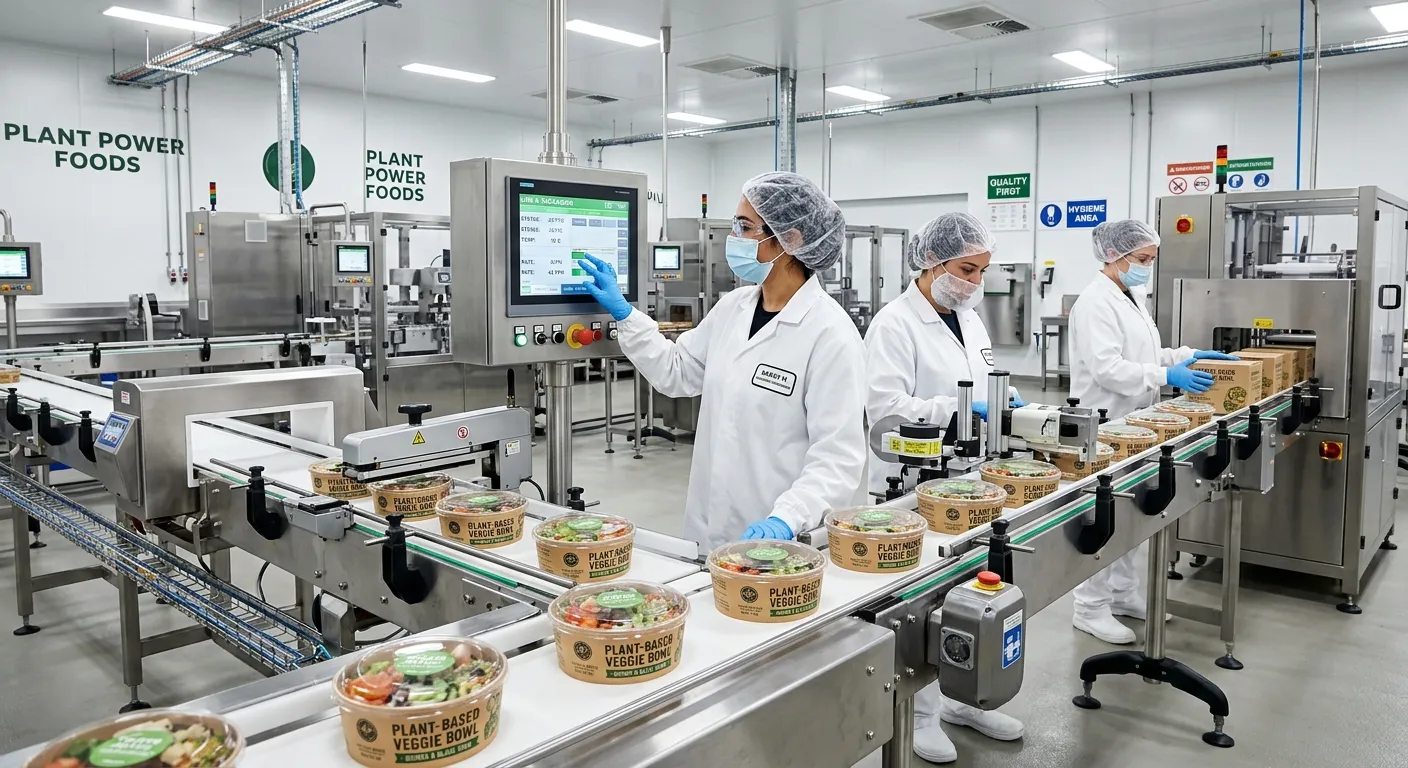
Staff in these areas often seek employers whose values align with theirs, making employer branding around sustainability a powerful recruitment tool.
Data Literacy in Daily Operations
Modern food production is data-driven. Line workers may need to input quality metrics into tablets, while supervisors analyze Overall Equipment Effectiveness (OEE) dashboards. The ability to understand and act on data—such as identifying a minor deviation in cooking temperature trends—is becoming a core competency. Training programs must now incorporate basic data interpretation, and job descriptions for shift leaders should highlight this requirement.
This integration of tech and operations blurs the line between production and quality assurance, creating hybrid roles that command higher wages and offer better career progression.
Case Study: Scaling a Artisan Sauce Manufacturer
Challenge: A fast-growing sauce company won a national supermarket contract, requiring a 300% output increase in 8 weeks. Their small, skilled core team couldn't scale alone, and they lacked the HR infrastructure for a mass hire.
Solution: They partnered with a specialist food production agency to implement a blended workforce model. The agency provided:
- A permanent shift manager sourced via a Chef Recruitment Agency London network to lead the new line.
- 15 temporary production operatives for basic filling, capping, and labelling tasks.
- 2 temporary hygiene technicians to ensure round-the-clock cleaning compliance for the new shift pattern.
Outcome: The production line was fully staffed and operational in 3 weeks. After 6 months, 8 of the temporary staff were offered permanent contracts, building a loyal, trained core for the expanded operation. The agency managed all compliance and payroll for the temporary phase, allowing management to focus on production quality and integration.
Mastering Recruitment for Niche Food Production Roles
Some positions require a hunter's approach rather than a standard recruitment advert. Here’s how to tackle hard-to-fill roles.
1. The Artisan & Craft Specialist
Roles like master butcher for a premium retailer, chocolatier, or fermentation specialist (for kimchi, kombucha, etc.) require a blend of traditional craft and food science. These professionals are rare and rarely job-hunting.
Strategy: Engage with industry guilds, sponsor student competitions at specialist culinary schools, and use targeted social media advertising on platforms like Instagram, showcasing the artistry involved. A generic job board posting will fail.
Tip: These hires are often as much about cultural fit and passion as skill. The interview process should involve practical, hands-on trials.
2. The High-Care & Chilled Production Expert
Producing ready-to-eat meals, prepared salads, or chilled desserts requires rigorous adherence to cold-chain protocols and modified atmosphere packaging (MAP). Staff must have an ingrained understanding of microbiological risk.
Strategy: Look for candidates from established chilled food manufacturers. Certifications like HACCP Level 3 are a minimum. During recruitment, scenario-based questions ("What would you do if the chill chain was breached?") are crucial. Partnering with an agency that understands these critical differentiators is key, similar to how you'd secure staff for environments requiring Counter Terrorist Cleared status for specific government contracts.
Note: These roles typically command a wage premium due to the higher responsibility and technical knowledge required.
The common thread in niche recruitment is specialist knowledge. Whether you're building a team for a high-end event needing Event Catering Staff or a 24/7 factory, understanding the precise skill and temperament needed—and knowing where to find it—is what separates an adequate hire from a transformative one.
A Blueprint for Effective Onboarding & Continuous Training
Hiring is only the first step. A structured integration and development program is what ensures long-term productivity and retention.
The First 90 Days: A Phased Approach
Immersion & Compliance
Beyond paperwork, this phase focuses on safety culture. Include shadowing, site-specific hazard workshops, and introductions to the team and management. For temporary staff from an agency, ensure your site supervisor briefs them as thoroughly as permanent hires—this immediately boosts engagement and safety.
Skill Application & Mentorship
Assign a seasoned colleague as a mentor. The new hire transitions from observing to doing under guided supervision. Focus on mastering core tasks for their role. Regular, informal feedback is critical here to correct course quickly and build confidence.
Integration & Contribution
The employee should now be operating independently. Schedule a formal 90-day review to discuss performance, career aspirations within the company, and gather their feedback on processes. This demonstrates investment in their future, a powerful retention tool.
Essential Training Modules Beyond Basics
- • Waste Reduction & Yield Management: Teaching staff how minor adjustments in technique impact overall product yield and profitability.
- • Allergen Control Cross-Contamination: Advanced, practical sessions beyond certificate theory, crucial for multi-product facilities.
- • Basic Mechanical Understanding: Empowering line staff to perform elementary clears and report faults accurately, reducing downtime.
- • Soft Skills for Progression: For aspiring supervisors, training in communication, conflict resolution, and how to conduct a handover.
Investing in continuous training not only improves safety and efficiency but also signals to your team that they are valued, directly addressing one of the key drivers of turnover in the food production sector.

